Where To See Quokkas On Rottnest Island: Times, Spots And Rules
Rottnest Island, known to the Whadjuk Noongar people as Wadjemup, carries the world's largest quokka population, and most day visitors see at least one. The catch is timing and place: quokkas are mainly nocturnal, family groups cluster where water and shade are, and a strict set of wildlife rules governs every encounter.
Short answer
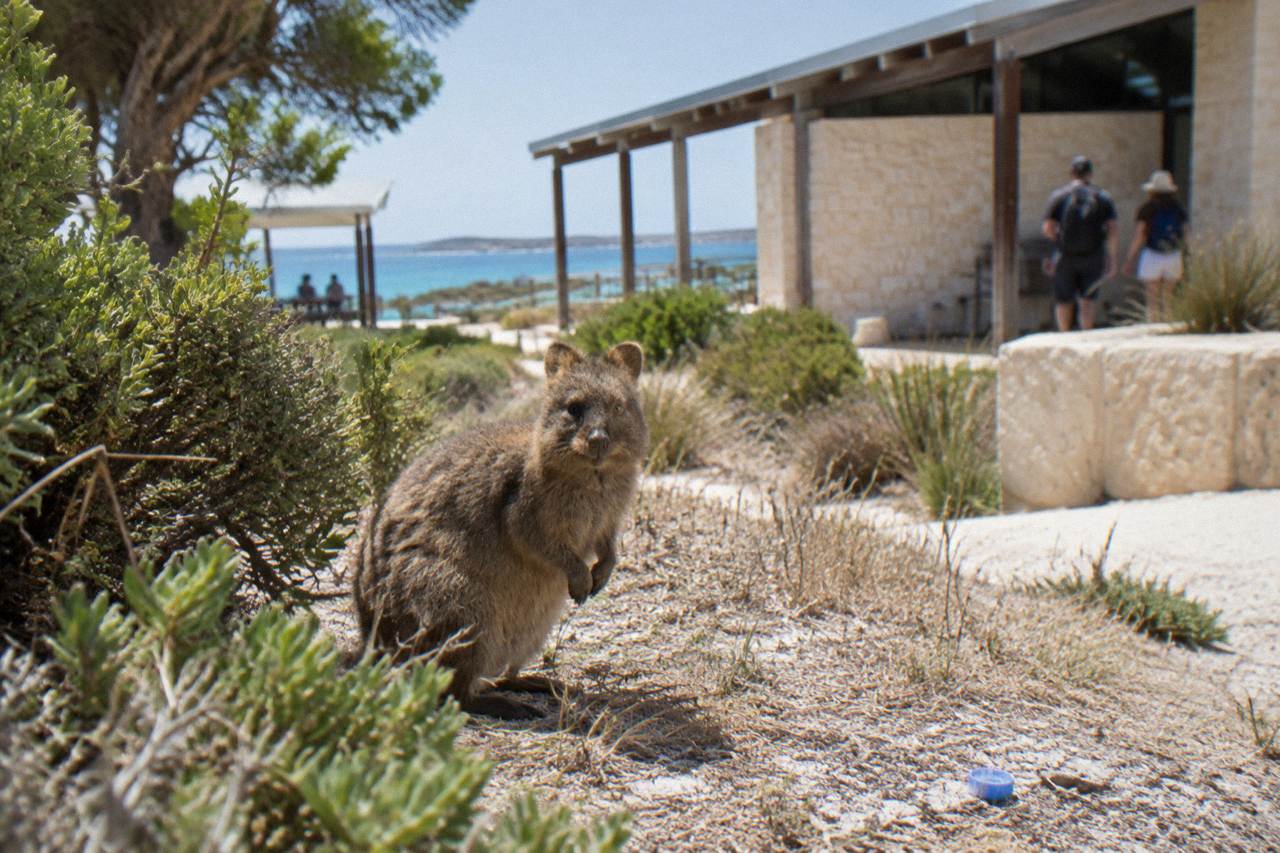
Quokkas live right across Rottnest Island, and the easiest sightings are in and around the Settlement and Thomson Bay, where family groups gather near water and shade. They are most active early morning and late afternoon. Joeys appear in the pouch from about August. Touching or feeding a quokka is prohibited and can draw an on-the-spot fine.
Rottnest Island, known to the Whadjuk Noongar people as Wadjemup, carries the world's largest quokka population on a predator-free, vehicle-restricted island just 19 km from Fremantle Port. That single fact is why thousands of day trippers arrive on the Rottnest Fast Ferries bike day from Hillarys, the Rottnest Express sailing from Fremantle and the SeaLink ferry and bus tour from Perth each week with a quokka at the top of the wish list. Most of them succeed, because quokkas are genuinely widespread here. The difference between a distant blur in the scrub and a calm, close-range observation is usually knowing when they move, where the family groups gather, and what the law expects of you once you find one.
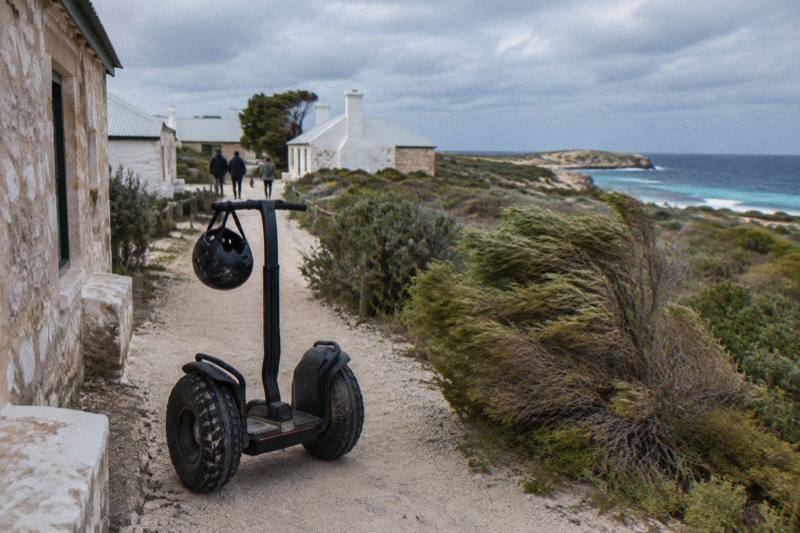
This guide lays out all three, using the official island pages and the federal conservation record rather than folklore. It also covers joey season, the photo etiquette the Rottnest Island Authority actually publishes, and the small-group products that route through the best quokka habitat, from the private rickshaw tour that departs Frankie's on Rotto to the Segway tours that roll out of Bedford Ave in the Settlement.
Where Are Quokkas Found On Rottnest Island?
Quokkas live across the whole of Rottnest Island, in family groups spread from the Settlement out to the quieter bays and walking trails, because the island is predator-free and classed as a Class A Reserve. The easiest place to see them is the Settlement area around Thomson Bay, where shade, water and mown lawns concentrate animals close to where visitors walk. Beyond the Settlement, they occupy natural habitat right around the island's 19 square kilometres.
The island is small in human terms, 11 km long by 4.5 km wide, but it holds a subpopulation that fluctuates with the seasons. The federal environment department's quokka action plan notes the Rottnest subpopulation can reach roughly 10,000 to 12,000 animals at temporary highs and falls to much lower levels in dry periods, against a 2013 recovery plan estimate of 8,000 to 12,000. The same listing puts mainland Western Australian subpopulations at an estimated 3,000 to 4,000 in 2022, which is the clearest illustration of why Wadjemup matters so much to the species. The quokka is listed as Vulnerable under national environment law, and the island population is the reason it remains visible to visitors at all.
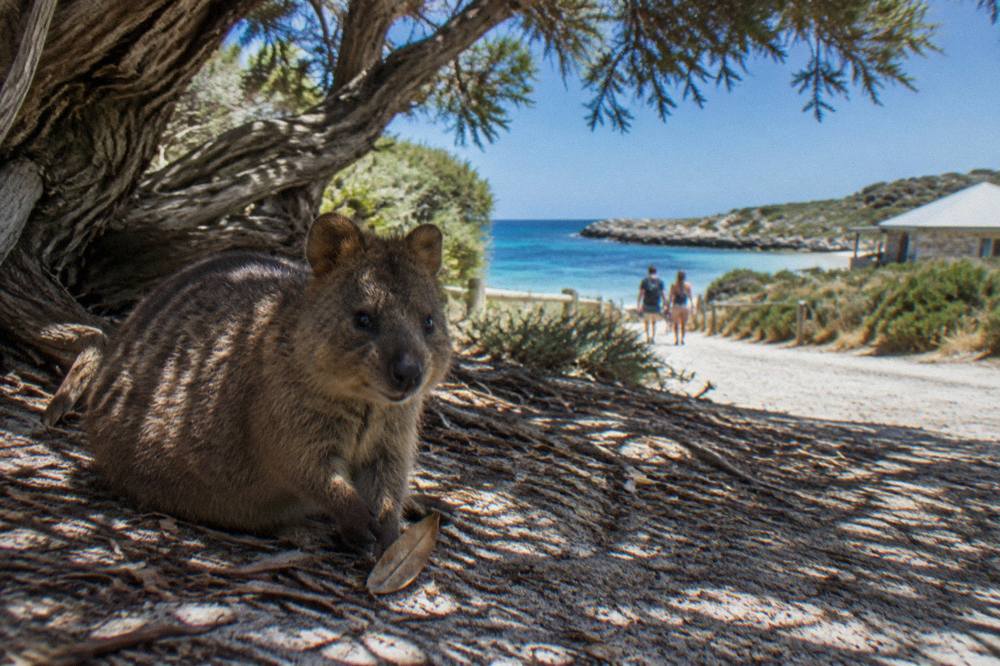
For a day visitor, the practical geography is simple. The Settlement at Thomson Bay is the transport hub: every ferry, whether the SeaLink sailing, Rottnest Express or the Hillarys boats, berths at the Main Jetty there, and quokkas forage in the gardens, shaded verges and lawns within a few minutes' walk of it. The official quokka page on the island site confirms that family groups occur right across the island but are commonly seen in and near the Settlement because of the resources there. Quieter sightings, often of animals behaving more naturally, come from the bays and trails further out: Geordie Bay and Longreach on the northern coast, the salt-lake margins on the Gabbi Karniny Bidi loop, and the shaded sections of the walking trail network. Bikes are banned from the walking trails, so the hiking routes are where pedestrians have the habitat to themselves.
One nuance worth knowing before you plan a route: quokkas can climb trees, which surprises visitors who expect a strictly ground-dwelling wallaby. They are also strong swimmers between habitat patches. Neither behaviour is common to witness, but both explain sightings that seem to be in the "wrong" place.
| Location | Ease for a day visitor | Why quokkas are there | Best approach |
|---|---|---|---|
| Settlement and Thomson Bay | Easiest on the island | Shade, water, lawns, food plants near the jetty | Walk slowly, stay on paths, look along garden edges |
| Geordie Bay | Easy by bike or bus | Shaded camping and lawn areas on the north coast | Ride the sealed path, dismount and observe |
| Parker Point and Little Salmon Bay | Moderate | Coastal scrub near the snorkel trails | Combine with the snorkel trail or bus stop 5 |
| Salt lakes and Gabbi Karniny Bidi | Moderate, walkers only | Boardwalks through quieter habitat | Allow the 9.5 km loop's 3 to 4 hours |
| West End | Hardest | Remote, exposed, fewer animals per visitor | Only worthwhile combined with a bus tour |
If your day is built around the northern beaches, the Rottnest beaches and swimming guide covers the bays themselves, and several of the same spots double as quokka habitat in the shaded strips behind the sand.
When Is The Best Time Of Day To See Quokkas?
Quokkas are mainly nocturnal, so the official island guidance is that they are most active early in the morning and late in the afternoon, resting in shade through the middle of the day. A ferry that lands you at Thomson Bay in the morning, or keeps you on the island past mid-afternoon, lines up with the two windows when animals are moving and feeding. Midday sightings still happen, but they are usually of animals sheltering, not actively foraging.
That rhythm has real consequences for itinerary design. The full-day ferry and bike packages, like the Hillarys bike day run by Rottnest Fast Ferries, typically give you both windows: animals still moving when you land, and a second wave of activity before the return sailing. Shorter visits that arrive late morning and leave mid-afternoon catch the quietest stretch of the quokka day. In summer, when the official weather page puts average temperatures around 26 C, the midday shade-rest is even more pronounced, and the late-afternoon window shortens as feeding shifts toward dusk.
| Time of day | Quokka activity | What you are likely to see | Visitor tip |
|---|---|---|---|
| First hour after sunrise | High | Foraging, moving between shade and feeding areas | Best window, before tour crowds build |
| Mid-morning | Moderate to low | Animals settling into shaded rest spots | Settlement gardens still productive |
| Midday | Low | Resting animals deep in shade | Swim, snorkel or cycle; check back later |
| Late afternoon | High | Active feeding ahead of dusk | Second-best window, easy from the Settlement |
| Dusk into night | Highest, hardest to watch | Main nocturnal activity begins | Day visitors are usually on the last ferry |
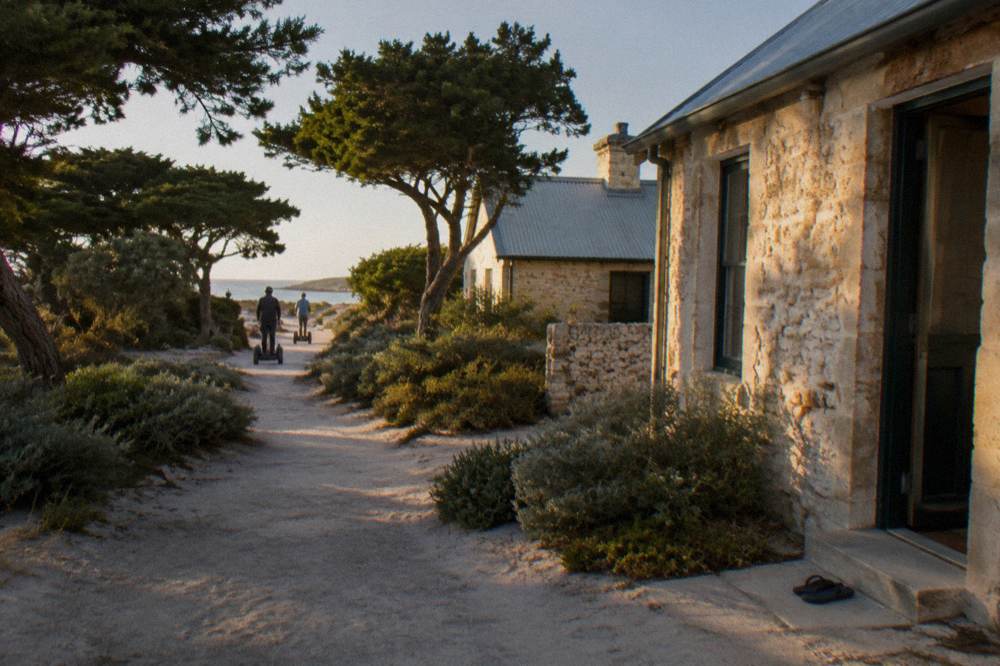
The timing question also shapes which guided product fits. The 1-hour Settlement Segway tour from Segway Tours WA, from A$98 per person with a 4.7 rating from 63 reviews, runs short loops through exactly the habitat that holds animals at the edges of the day, and its hour-long format slots neatly into a morning or late-afternoon gap in a cycling itinerary. The Fortress Adventure Segway tour, 1.5 hours from A$139 per person with 4.8 from 117 reviews, pushes out toward the island's military heritage sites with a maximum of 10 per group.
One more timing layer: season. Quokkas are present year-round, but the population's condition tracks the seasons, and the island's winter rain and summer heat shift where the best shade and feed sit. The Rottnest weather and best time to visit guide unpacks the climate calendar in full.
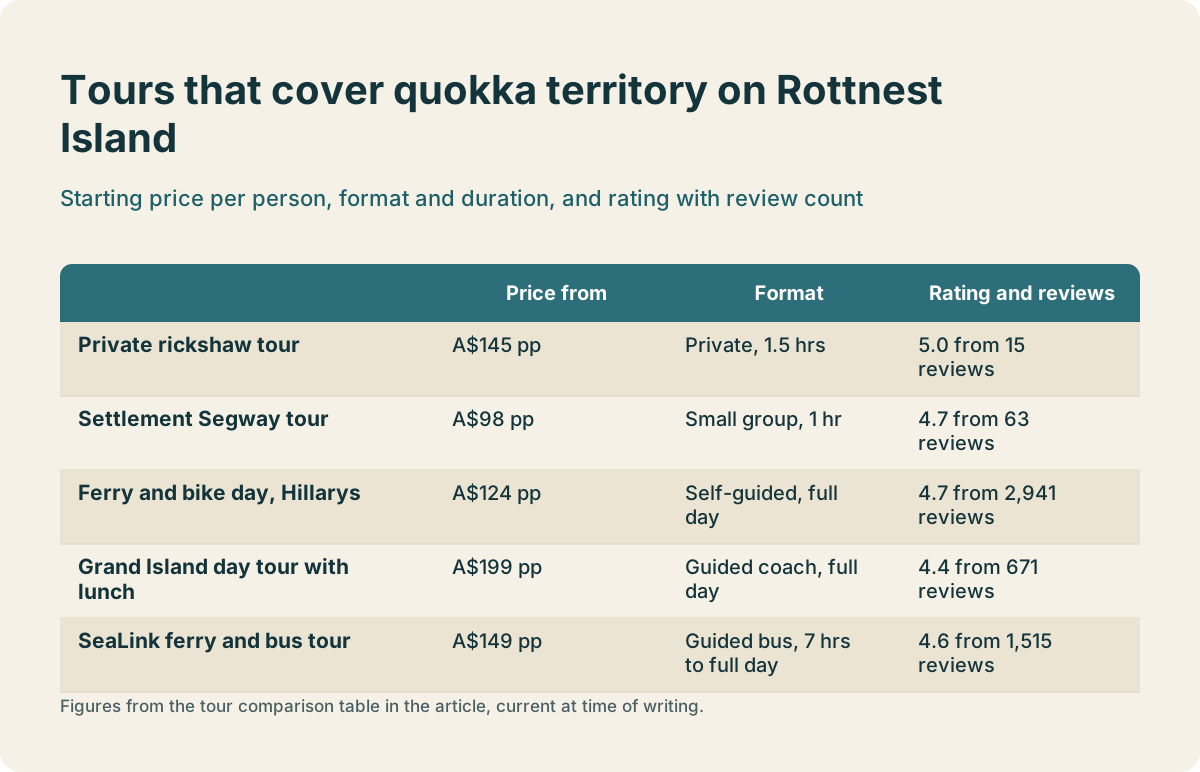
Which Tours Take You Through Quokka Territory?
Every tour that starts in the Settlement crosses prime quokka habitat, because Thomson Bay is where family groups are easiest to find. The private rickshaw tour from Frankie's on Rotto covers the Settlement and bays at a slow pace, Segway tours roll the same ground, ferry and bike packages let you linger wherever animals appear, and the Oliver Hill train and tunnel tour adds quieter habitat away from the crowds.
The private rickshaw tour deserves a specific mention for this question. It carries a 5.0 rating from 15 reviews, runs 1.5 hours from A$145 per person for three adults or a family of four, and departs Frankie's on Rotto on Somerville Drive in Thomson Bay, which places it squarely in the most reliable quokka ground on the island. Because it is private, the pace bends to what you find. A guide who reads the island daily knows which shaded corners hold animals at a given hour, and the rickshaw format lets you stop without blocking a cycle path. That said, a rating from fifteen reviews is a small pool, and no tour can promise a quokka encounter: quokkas are wild animals, and honest operators treat sightings as likely rather than certain.
For visitors arriving under their own steam, the comparison is between guided proximity and independent range. The bike packages buy range: the Hillarys ferry and bike day, 4.7 from 2,941 reviews, the deepest review pool on the island's tour roster, costs from A$124 per person and includes the ferry, the bike and the island admission fee collected inside the fare. The Fremantle versions run marginally more, from A$127 per person with Rottnest Express or SeaLink, and the SeaLink variant carries a 4.8 rating from 503 reviews. On two wheels you can reach Geordie Bay or the Parker Point snorkel trail, where the quokka density per visitor drops but the animals behave more naturally.
| Tour | Format | Price from | Rating and reviews | Quokka relevance |
|---|---|---|---|---|
| Private rickshaw tour | Private, 1.5 hrs, island-only | A$145 pp | 5.0 from 15 reviews | Slow, guided loop of the Settlement's core habitat |
| Settlement Segway tour | Small group, 1 hr, island-only | A$98 pp | 4.7 from 63 reviews | Quick guided loop of the same ground |
| Ferry and bike day, Hillarys | Self-guided, full day | A$124 pp | 4.7 from 2,941 reviews | Range to reach the bays under your own timing |
| Grand Island day tour with lunch | Guided coach, full day, from Hillarys | A$199 pp | 4.4 from 671 reviews | Covers island highlights with lunch included |
| SeaLink ferry and bus tour | Guided bus, 7 hrs to full day | A$149 pp | 4.6 from 1,515 reviews | Reaches West End and the lighthouse, often sells out |
The guided Rottnest trips from Perth guide compares the full escorted options if you would rather not plan the island yourself, and Rottnest Island Tours lists every bookable product with its live price and cancellation terms.
Can You Touch Or Feed A Quokka?
No. The official rules are to observe from a safe distance, do not touch, do not feed and stick to the paths. Deliberate interference with wildlife, including feeding, can draw an on-the-spot fine under the Rottnest Island Regulations 1988 and potential prosecution with fines up to A$10,000. The island is a Class A Reserve and rangers patrol it, so these rules carry real enforcement, not just signage.
The reasons behind the rules are worth understanding, because they change how you behave even when no ranger is watching. Quokkas on Rottnest have no natural predators, so their apparent tameness is simply an absence of fear, not an invitation. Human food damages them directly: processed food can cause illness, and feeding trains animals to approach people, which concentrates them unnaturally and puts them at risk around roads, bikes and dogs. The official protect-our-wildlife guidance extends the ban to giving water as well as food. The Rottnest Island Authority's wildlife protection page states the rules in full, and the official quokka page frames the encounter the same way: observe, do not disrupt.
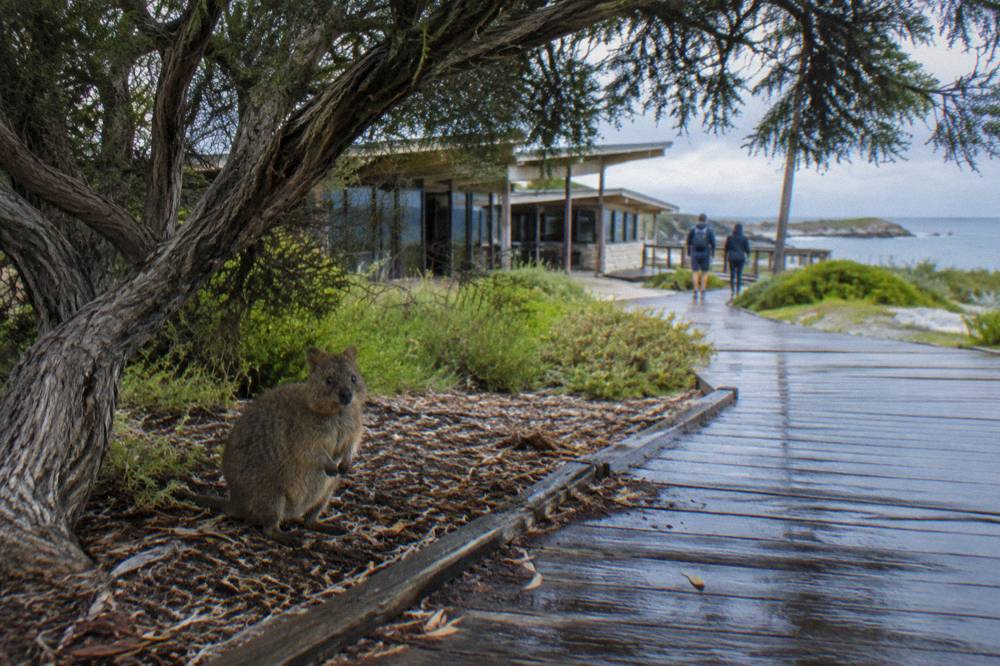
The on-the-spot fine sits under the Rottnest Island Regulations 1988, and deliberate interference can escalate to prosecution under wildlife conservation law with fines up to A$10,000. Enforcement is visible: rangers work the island, and the Settlement's high foot traffic makes it the most patrolled habitat. The practical version of compliance is simple. Stay on the paths. Keep food sealed and out of sight when quokkas are near, including in open bags at cafes. If an animal approaches you, which does happen because they are curious, step back slowly rather than holding your ground for a photo.
Free interpretive options reinforce the message. The Rottnest Volunteer Guides run free guided walking tours daily from the historic Salt Store, including a Meet the Quokkas walk, though times are examples only and shift with weather and volunteer availability, as the free things to do on Rottnest guide explains.
When Can You See Quokka Joeys?
Joeys become visible in the pouch from about August, and they take their first hops out of the pouch around September, following late-summer births. That makes late winter and early spring, roughly August to October, the joey window on Rottnest, with the animals still easiest to find around the Settlement in the early morning and late afternoon.
The timing comes from the official nature pages and reflects the quokka's breeding cycle: births occur in late summer, the joey develops in the pouch through winter, and by early spring it is peeking out and then emerging briefly before becoming independent. A September or October visit, coinciding with the start of the warm-water season, pairs joey sightings with milder cycling weather and thinner crowds than the December-to-February peak. Wildlife watchers should still calibrate expectations: a joey sighting depends on which females are where, and no operator can schedule one.
Outside the joey window, the population itself shifts with the seasons. The federal conservation listing notes the island subpopulation fluctuates, high after good conditions and markedly lower through dry stress periods, which is one reason the animals concentrate near reliable water and shade in the Settlement rather than spreading evenly. The national quokka action plan page carries the population and conservation detail for readers who want the fuller picture, including why the species remains listed as Vulnerable despite the island's healthy numbers.
How Close Can You Get For A Quokka Photo?
As close as the quokka chooses to be, provided you do not touch, feed or bait it. The official etiquette is to use your camera's zoom for a safe distance and, if a quokka approaches you, to step back slowly. A photo taken from a respectful distance with the animal behaving naturally is both the legal outcome and, usually, the better picture.
The mechanics matter more than most visitors expect. Crouching down to quokka eye level with a phone at arm's length produces the classic frame, but only when the animal has chosen to stand its ground. Chasing, cornering or herding an animal for a better angle counts as interference regardless of intent. Blocking a quokka's path back to shade, a real risk at midday, stresses it in the heat. The rules are the same whether you are on foot, on a Segway or pausing a bike: dismount, keep to the path, let the animal set the distance.
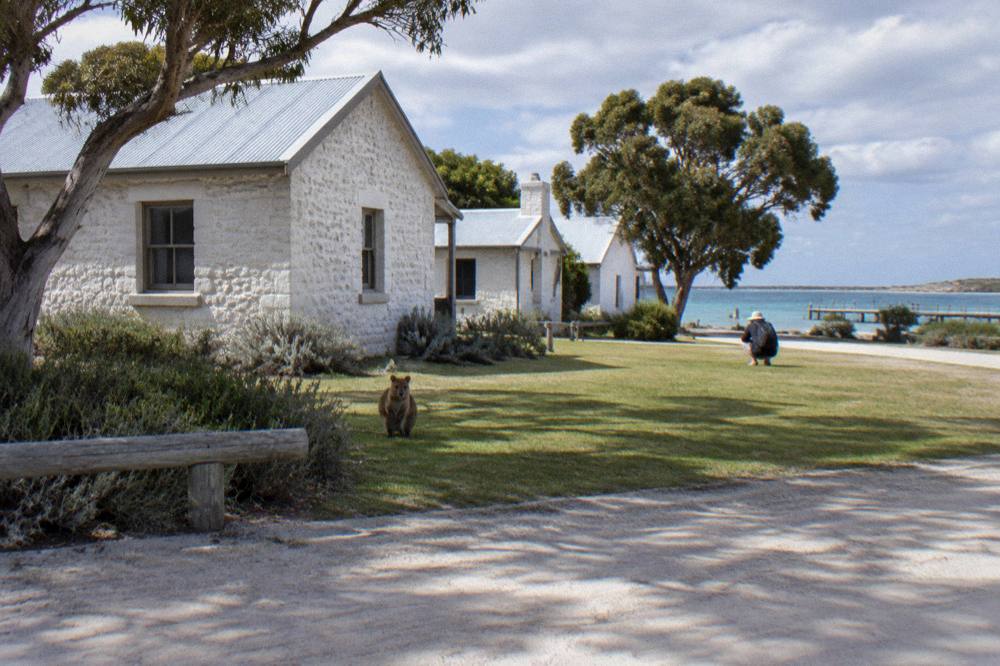
Photographers planning around light will find the active windows double as the golden hours, which is convenient. The early-morning window on the Settlement's east-facing lawns gives warm side light, and the late-afternoon window does the same toward the west. Both are also when the Segway and rickshaw tours run, which is not a coincidence: the operators time their loops to when the island's animals are visible. If your priority is a photograph rather than a sighting, plan at least two windows into the day, one at each end, and treat anything at midday as a bonus.
For the wider wildlife picture beyond quokkas, from the New Zealand fur seals at Cathedral Rocks to the whale season that runs August to December with sightings sometimes from June and July, see the Rottnest boat cruises and eco tours guide.
What Else Should You Know Before Going?
Bring water, sun protection and sealed food bags, plan your day around the two activity windows, and book any guided product ahead in peak season. The island is vehicle-restricted, helmets are legally required on bikes, bikes can be fully booked in peak season, and arriving at least 30 minutes before your ferry departure is the official advice. Quokka country is walked, cycled and rolled, never driven.
A few practicalities close the loop between the wildlife and the logistics. The ferry crossing is about 25 minutes from Fremantle, 45 from Hillarys and up to 90 from Barrack Street Jetty in Perth, all arriving at the Main Jetty in Thomson Bay, so the first quokka habitat is a two-minute walk from where you disembark. The island admission fee, A$21.50 for an adult single day, is collected inside the ferry fare rather than paid separately, and most ferry packages on the roster include it. Timetables vary by season and weather, and the peak-summer weeks are when the popular products, including the SeaLink ferry and bus tour, are flagged as often selling out.
The Habitat elsewhere on the island rewards the slower visitor. The 45 km of walking trails and 22 km of cycle paths cover very different ground: the Rotto Mini Loop at about 4 km suits families with small children, the 10 km Beaches, Lighthouses and Lakes ride takes 1.5 to 3 hours, and the full 22 km island loop is a 3-to-5-hour undertaking with challenging hills best left to experienced riders, as the best bike route around Rottnest explains in detail.
| Plan | Morning window | Middle of the day | Late window | Suits |
|---|---|---|---|---|
| Ferry and bike day | Settlement gardens on foot after landing | Ride to Geordie Bay, swim at The Basin | Return through the Settlement before the ferry | First-time visitors, photographers |
| Segway plus ferry | 1-hour Settlement Segway loop | Bike or bus to Parker Point | Lawns near the jetty | Short attention spans, cruise passengers |
| Grand Island day with lunch | Coach circuit of island highlights | Lunch stop, lighthouse lookouts | Free time in the Settlement | Visitors who want everything arranged |
| Walking-only day | Free volunteer-guided walk from the Salt Store | Shade, snorkel or museum | Gabbi Karniny Bidi section or Settlement stroll | Slow travellers, repeat visitors |
However you build the day, the quokkas will be doing what they do regardless of your schedule: resting through the heat, feeding at the edges of the day, and holding the island's lawns and scrub as their own. The visitor's job is simply to arrive in the right window, walk softly, and leave them exactly as found.
Common Questions About Quokkas On Rottnest Island
Where are quokkas on Rottnest Island?
Right across the island, in family groups, with the Settlement and Thomson Bay the easiest place to see them because of the shade, water and lawns. Quieter sightings come from Geordie Bay, the salt-lake margins and the walking trails.
When is the best time of day to see quokkas?
Early morning and late afternoon. Quokkas are mainly nocturnal and rest in shade through the middle of the day, so plan your viewing around the start and end of your ferry day.
Can you touch or feed a quokka?
No. The rules are to observe from a safe distance, do not touch, do not feed and stick to the paths. Deliberate interference, including feeding, can draw an on-the-spot fine and potential prosecution with fines up to A$10,000.
When can you see quokka joeys on Rottnest?
Joeys are visible in the pouch from about August and take their first hops around September, so late winter and early spring are the joey months.
Are quokkas only found on Rottnest Island?
No. Small mainland subpopulations exist in Western Australia, estimated at 3,000 to 4,000 animals in 2022, but Rottnest carries the world's largest population in a predator-free environment.
Do any tours guarantee a quokka sighting?
No tour can guarantee a sighting, because quokkas are wild animals. Tours that route through the Settlement, such as the rickshaw and Segway products, put you in the most reliable habitat at the best times of day.