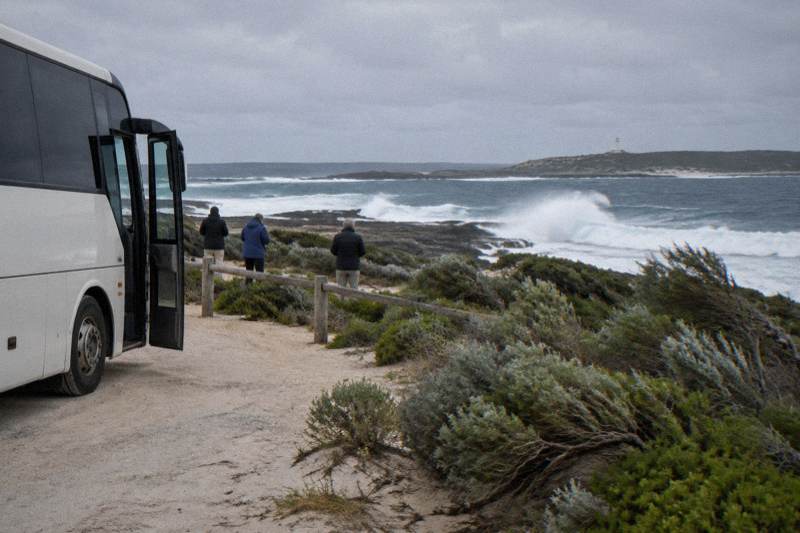
Do Quokkas Only Live On Rottnest Island?
No, quokkas are not only on Rottnest Island. The species survives in scattered mainland subpopulations and on the island, which holds the world's largest population. Here is what the official numbers say and how to see them responsibly.
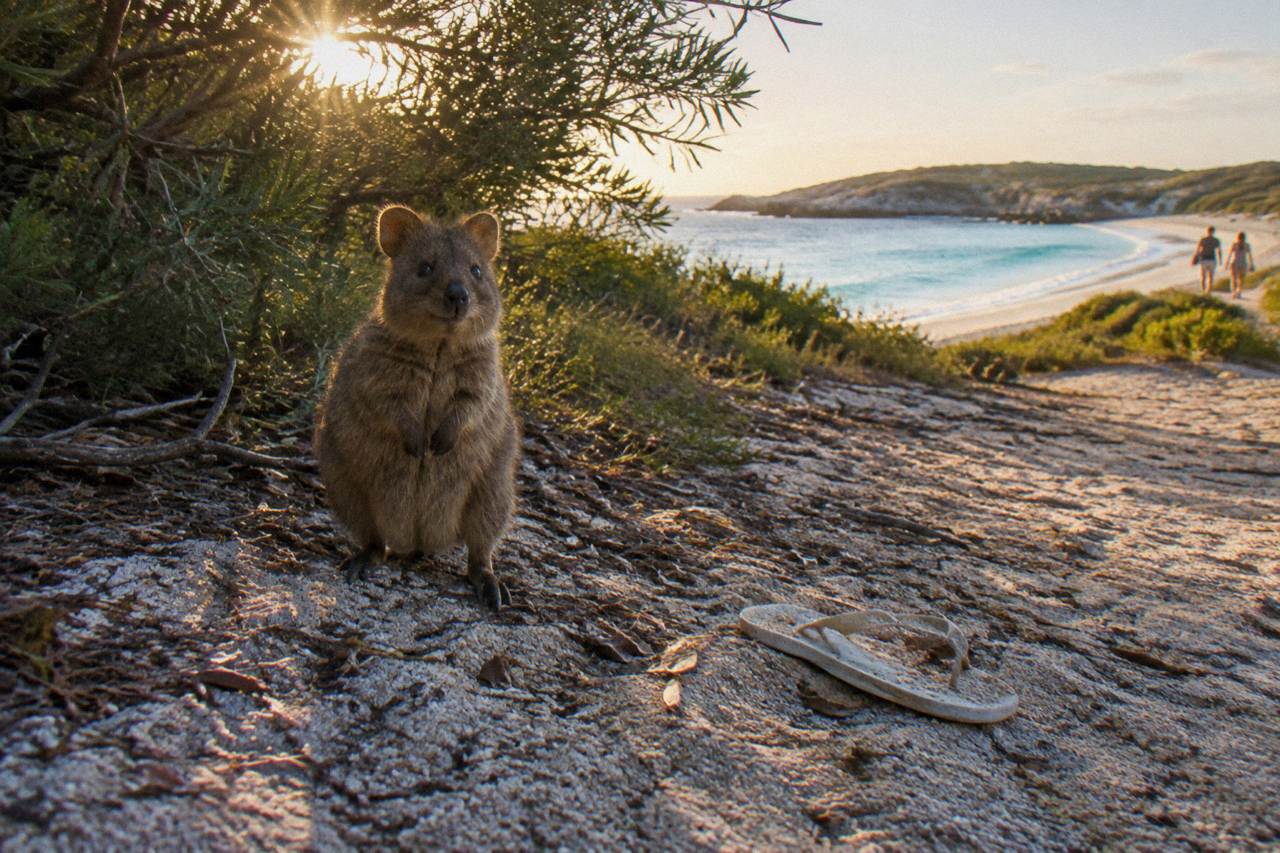
Do Quokkas Only Live On Rottnest Island?
No, quokkas do not only live on Rottnest Island. The species is native to the south-west of Western Australia and survives in small, scattered mainland subpopulations, estimated at roughly 3,000 to 4,000 animals combined in 2022, according to the federal environment department. Rottnest Island, by contrast, supports the world's largest quokka population, with numbers that can reach 10,000 to 12,000 at their seasonal peak. The island is the stronghold, not the whole story. To understand why the island suits them so well, our guide to what makes Rottnest Island special covers everything from its beaches and bays to its relaxed car-free pace.
That gap between a few thousand mainland animals and a five-figure island population explains almost everything about how people experience quokkas. On the mainland, quokkas are shy, nocturnal and scattered through dense habitat where a casual visitor has little realistic chance of spotting one. On Rottnest, they wander near the settlement at Thomson Bay, shelter in shade through the middle of the day, and browse around the bays at either end of it. The practical answer for a traveller is straightforward: if seeing a quokka in the wild is the goal, Rottnest is where the odds and the access line up. Once you do spot one, how close you can actually get to a quokka is governed by rules most visitors never read.
The federal Department of Climate Change, Energy, the Environment and Water classifies the quokka as Vulnerable under national environment law, which is worth pausing on. An animal that photographs easily and appears everywhere in tourism imagery is still a threatened species, and the ease of seeing one on Rottnest is a feature of that one protected island rather than a sign the species is everywhere. The island's predator-free status and reserve management do work that mainland habitat cannot, and the department's own species profile treats the two situations as markedly different.
The way most visitors actually get there shapes the experience too. The Rottnest Fast Ferries bike day from Hillarys, the Rottnest Express bike day from Fremantle and the SeaLink ferry and bus tour all deliver you into Thomson Bay within walking distance of the settlement areas where quokkas are most often seen, and the private rickshaw quokka tour and the Segway tours run from the Settlement itself. For more on planning that side of the trip, the Rottnest Island Tours roster covers every ferry, bike, bus and guided option in one place, each listing its price and review count.
Where Else Do Quokkas Live In The Wild?
Beyond Rottnest Island, quokkas survive in scattered subpopulations on the mainland of south-west Western Australia, in dense forested habitat south of Perth. The federal environment department put the combined mainland population at roughly 3,000 to 4,000 animals in 2022. Those groups are small, fragmented and mostly active at night, which is why mainland quokkas are rarely seen and why Rottnest, with a population several times larger, dominates the public picture of the species.
The mainland quokkas live in dense, wet forest country where they shelter under thick vegetation through daylight hours. Their numbers are fragmented into isolated groups, and that fragmentation is precisely what makes the species vulnerable: a single fire, drought or predation event can wipe out an entire subpopulation because there is no easy flow of animals between groups to rebuild it. The department's species profile notes that Rottnest is the largest subpopulation, with the island's numbers fluctuating seasonally between highs of 10,000 to 12,000 and much lower levels, and that the 2013 national recovery plan estimated 8,000 to 12,000 animals on the island.
| Population | Estimated size | Notes |
|---|---|---|
| Rottnest Island | 10,000-12,000 at seasonal high; recovery plan estimated 8,000-12,000 | World's largest subpopulation; predator-free island; numbers fluctuate seasonally |
| Mainland WA subpopulations (combined) | About 3,000-4,000 (2022 estimate) | Fragmented groups in south-west forest habitat; mostly nocturnal and rarely seen |
Two things follow from that table. First, the island is not just the biggest quokka population, it is several times the size of every mainland group combined, which is a remarkable concentration of a threatened species on 19 square kilometres of land. Second, the difference in visibility is even larger than the difference in numbers, because mainland quokkas hide in thick bush and the island animals live around a settlement with paths, lawns and shade trees. A visitor who spends a day on Rottnest will often see several quokkas without particularly trying; a visitor looking for them in mainland forest could search for days and come home without a glimpse.
The island's advantage is structural rather than accidental. Rottnest is free of the introduced predators that suppress mainland populations, and it is managed as a Class A Reserve with the quokka population monitored as part of the island authority's conservation reporting. None of that makes the mainland animals less important to the species' survival, and recovery efforts continue to focus on them precisely because they are the fragile part of the picture. If Rottnest were ever to suffer a catastrophe, disease or fire, the mainland groups would be the species' insurance policy, small and pressured as they are.
Why Is Rottnest Island Home To So Many Quokkas?
Rottnest Island supports so many quokkas because three advantages compound there: the absence of introduced predators, protection as a Class A Reserve, and reliable water and vegetation across a small, contained island. At its seasonal peak the population reaches 10,000 to 12,000 animals, a density mainland forest habitat simply cannot support.
Predation is the headline difference. On the mainland, introduced foxes and feral cats take a heavy toll on small ground-dwelling marsupials, and quokkas there persist mainly in habitat that offers dense cover to hide in. Rottnest has no foxes and no feral cats, so the limiting factors on the island population are seasonal food and water rather than being eaten. The Rottnest Island Authority manages the island as a Class A Reserve, and its reporting includes monitoring of quokka health, with recent annual reporting noting a good health rating for the island's population.
The seasonal swing matters when planning a visit. Island numbers climb toward the 10,000 to 12,000 range when conditions are good and fall away when summer heat and dry conditions bite, because quokkas are strongly influenced by the availability of fresh water and green feed. The animals are also mainly nocturnal and most active early morning and late afternoon, which is why the standard advice, repeated across the official island pages, is to look at dawn and dusk rather than midday, and to check the shaded areas near the settlement when the sun is high.
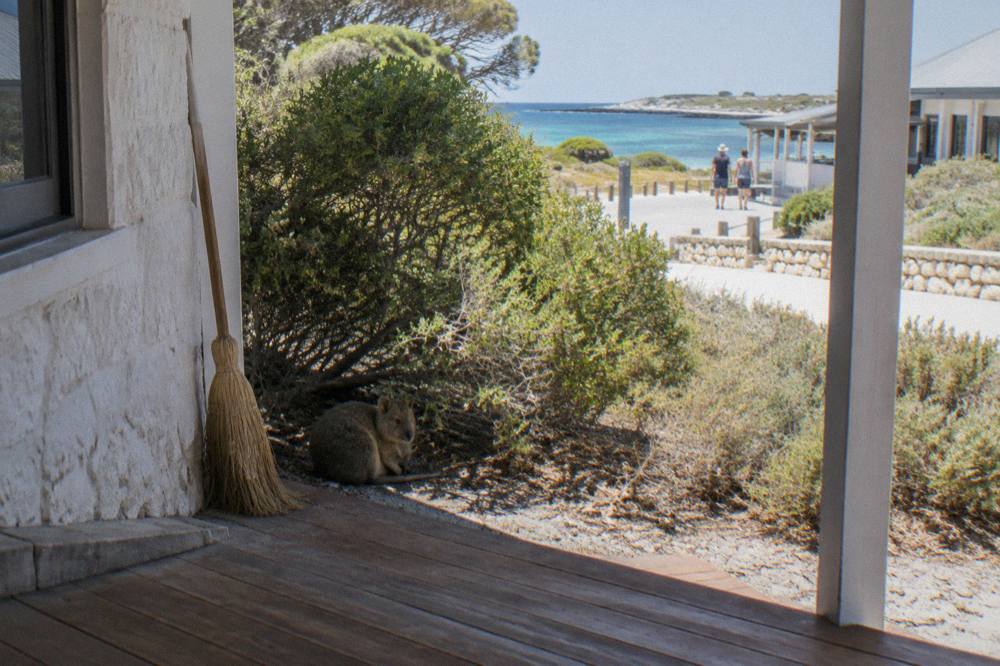
For visitors, the practical translation of all this is timing and location. A morning ferry from Fremantle or Hillarys lands you at the Main Jetty in Thomson Bay close to the quokkas' active window, and an afternoon return gives you the second one. The private rickshaw quokka tour run by Rotto Rickshaws departs from Frankie's on Rotto in Thomson Bay and covers 1.5 hours at a relaxed pace, which suits exactly the slow, quiet movement that wildlife watching rewards. The full guide to finding quokkas around the island maps the spots in more detail.
Where Are You Most Likely To See A Quokka On Rottnest?
The settlement area around Thomson Bay is where quokka sightings are most common, because the animals are drawn to water, shade and lawns close to where people congregate. Beyond the settlement, family groups live right across the island in natural habitat, from the quieter bays to the walking trails, with dawn and dusk the most active hours. No tour, spot or season can promise a sighting; the quokkas are wild and come and go entirely on their own schedule.
The official island pages are consistent on this point: quokkas are found right across the island, they are commonly seen in and near the settlement because of the resources there, and they favour shade in the middle of the day. The Rottnest Volunteer Guides run free guided walks, including a "Meet the Quokkas" walk departing from the historic Salt Store, with listed example times of 9:15 am and 2 pm that vary with weather and volunteer availability. Those walks are free, official and a good complement to a paid tour rather than a replacement for one, and they are run by volunteers rather than a commercial operator.
Paid options split into two broad types. Guided experiences such as the rickshaw tour and the Segway tours move slowly through the settlement and coastal paths with a local guide who knows the shaded spots. Do-it-yourself days, like the Rottnest Fast Ferries bike and ferry day from Hillarys or the Rottnest Express ferry and bike day from Fremantle, give you the freedom to ride out to the quieter bays where family groups live away from foot traffic. Neither approach guarantees anything, but both put you on the island for long enough to be there when the animals appear. If a slow roll past the shaded paths sounds like your pace, our guide to Segway tours on Rottnest Island covers what each route takes in.
| Way to look for quokkas | Where it runs | What it offers |
|---|---|---|
| Private rickshaw tour (Rotto Rickshaws) | From Frankie's on Rotto, Thomson Bay, 1.5 hours | Slow, guided loop for up to 3 adults or a family of 4, from A$145 per person |
| Segway tours (Segway Tours WA) | Bedford Ave, Settlement, 1 or 1.5 hours | Guided Settlement and fortress routes at a gentle pace, from A$98 per person |
| Ferry and bike day (Rottnest Fast Ferries) | Hillarys Boat Harbour, full day | Ferry, bike and admission from A$124, free range of the whole island |
| Free volunteer guide walks | Salt Store, Thomson Bay | Free official walks including a quokka-focused walk, times vary |
The choice between these formats usually comes down to pace and independence. Families with young children or visitors who prefer not to cycle tend toward the rickshaw or the Segway tours, both of which start in the Settlement and keep the effort level low. Confident riders get more range from a bike package, since 22 km of cycle paths put Geordie Bay, the West End and the quieter southern beaches within reach of a single day.
What Are The Rules Around Quokkas, And What Are The Penalties?
Do not touch, feed or give water to quokkas, observe from a safe distance, and stay on the designated paths. Deliberate interference with wildlife, including feeding, can draw an on-the-spot fine under the Rottnest Island Regulations 1988 and potential prosecution with fines up to A$10,000. Rangers patrol the island regularly, and the rules apply to every visitor regardless of how tame or friendly an individual animal appears to be.
The official wording from the Rottnest Island Authority is simple: observe from a safe distance, do not touch, do not feed, stick to the paths. The reasons are ecological as much as legal. Human food harms quokkas directly, and animals that learn to approach people for food change their natural behaviour in ways that put them at risk over the long term. A quokka that steps toward your camera is not issuing an invitation; the official guidance is to step back slowly and let the animal move away on its own terms.
If you want a photograph, use the camera's zoom rather than closing the physical distance, and never position food, water or any object to lure an animal closer. Sick or injured wildlife should be reported to the Rottnest Island Rangers on (+61 8) 9372 9788 rather than handled. The full background on why the rules are so strict, and on quokka behaviour generally, is covered in the guide to quokka tours and viewing rules.
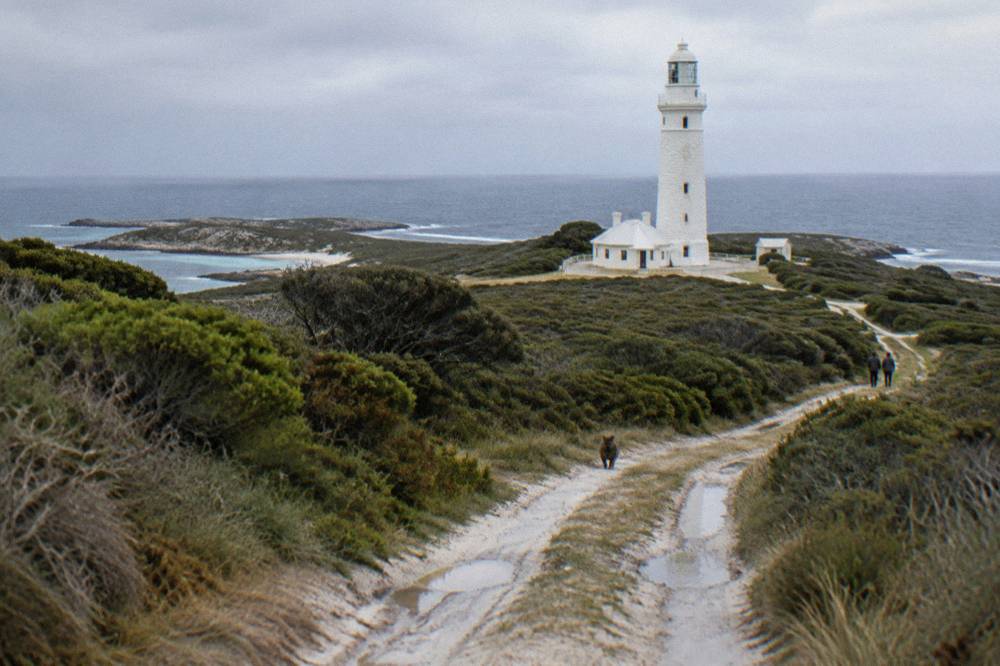
These rules shape which tours work well. The rickshaw and Segway operators build their routes around responsible viewing, moving through the settlement at low speed and keeping groups small; the Segway fortress tour caps groups at ten. A bike day works because cycling keeps you on the paths and moving, which is exactly the low-impact pattern the island authority asks for. Whatever you book, the official wildlife protection guidance is the standard every visitor is held to, and ignorance of it is no defence.
Which Tours Put You On The Island At The Right Time?
Ferry-based tours that arrive in the morning and leave late afternoon put you on the island for both daily activity windows, and guided versions add local knowledge of where quokkas actually are. Ferry and bike packages run a full day from A$123 to A$127 depending on the operator and departure port, while island-only guided tours range from A$40 for the Oliver Hill train and tunnel tour up to A$145 for the private rickshaw experience.
The full-day shape matters more than the specific operator. The Rottnest Fast Ferries bike day from Hillarys, rated 4.7 from 2,941 reviews and priced from A$124 including ferry, bike and admission, and the Rottnest Express bike day from Fremantle, rated 4.7 from 948 reviews and priced from A$127, both lock in the dawn-to-dusk span that covers quokka activity. The SeaLink ferry and bus tour, from A$149, suits travellers who would rather ride than pedal, and the Grand Island day tour with lunch from Hillarys bundles a structured itinerary for A$199 with the meal included.
Island-only tours suit anyone already committed to a ferry ticket, or anyone staying overnight. The Segway options are the closest thing to a dedicated quokka-friendly format: the one-hour Settlement tour costs from A$98, rated 4.7 from 63 reviews, and the 1.5-hour Fortress Adventure tour costs from A$139, rated 4.8 from 117 reviews, both departing Bedford Ave in the Settlement. The Oliver Hill train and tunnel tour is history-focused rather than wildlife-focused, but it is the cheapest guided product on the island at from A$40, rated 4.6 from 35 reviews. The comparison of Segway and guided tour options breaks down the routes and fitness requirements in detail.
Every ferry product on the roster collects the island admission fee inside the fare, so there is no separate A$21.50 adult landing payment to arrange on the day. Island-only products such as the train, Segway and rickshaw tours do not include the ferry, so overnight visitors and independent travellers should factor that in when comparing prices.
When Is The Best Time Of Year To See Quokkas?
Quokkas live on Rottnest Island all year, but your best odds come in the cooler months, when they stay active longer through the day, and again from August to September, when joeys appear in the pouch and take their first hops. Sightings are never guaranteed, since the population swings between a seasonal high of 10,000 to 12,000 animals and far lower numbers when conditions tighten.
The joey season is the headline. Births occur in late summer, joeys begin showing in the pouch from about August, and they take their first steps around September, per the official island nature pages. A visitor in early spring can see mothers with pouch young, which adds something the summer crowds do not get. Against that, summer brings the island's peak visitor numbers, warm-water activities from September to April, and midday heat that pushes quokkas deep into shade, concentrating sightings into the first and last hours of daylight.
| Season | Quokka viewing | Island conditions |
|---|---|---|
| Spring (Aug-Nov) | Joeys visible in pouch from August, first hops around September; active mornings | Mild, warming; whale season runs August to December |
| Summer (Dec-Feb) | Active at dawn and dusk only; shade-seeking midday | Busiest season; peak crowds and heat |
| Autumn (Mar-May) | Good activity as heat eases | Warm water through April, thinner crowds |
| Winter (Jun-Aug) | Longer activity windows on mild days; quietest settlement | Rain mostly falls in winter; suits hiking and wildlife |
Crowd levels are part of the calculation too. Every ferry product on the roster offers free cancellation except where the listing does not state it, and several, including the Fremantle ferry and bike day and the SeaLink ferry and bus tour, are flagged as often selling out in peak season. Booking ahead for December to February is the standard advice, and the question of advance ferry booking is worth settling before anything else on the itinerary.
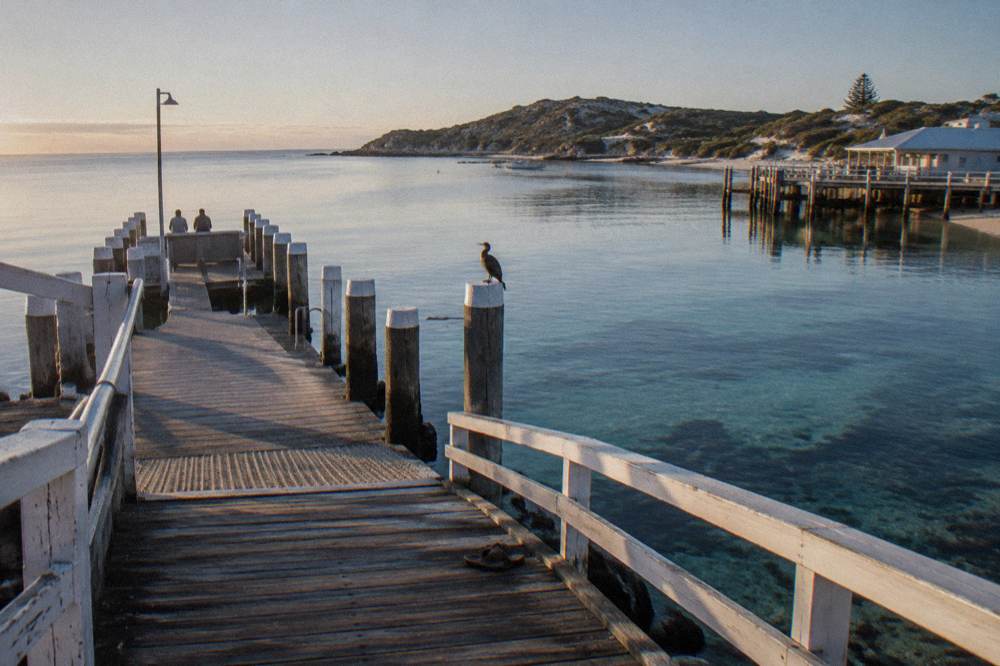
Weather plays a quieter role than most visitors expect. The island's mild climate averages about 26 C in summer and about 18 C in winter, with rain concentrated in the winter months, so a winter visit trades swimming comfort for quieter paths and longer wildlife activity windows. Spring and autumn split the difference and are the seasons where every part of a Rottnest day, from the ferry crossing to the last shaded stroll past the Settlement, tends to line up well.
Common Questions About Quokkas On Rottnest Island
Do Quokkas Only Live On Rottnest Island?
No. Quokkas also survive in scattered mainland subpopulations across south-west Western Australia, estimated at roughly 3,000 to 4,000 animals combined in 2022. Rottnest Island holds the world's largest population, reaching an estimated 10,000 to 12,000 animals at its seasonal high.
Are quokkas endangered?
The quokka is listed as Vulnerable under Australia's national environment law. The Rottnest population is the largest and lives in a predator-free reserve, but the mainland subpopulations are small and fragmented, which keeps the species in the threatened category.
Can you hold or feed a quokka?
No. Touching, feeding or giving water to quokkas is prohibited. Deliberate interference can draw an on-the-spot fine under the Rottnest Island Regulations 1988 and potential prosecution with fines up to A$10,000. Observe from a safe distance and stay on the paths.
Where is the best place on Rottnest to see a quokka?
The settlement area around Thomson Bay is where sightings are most common, because quokkas are drawn to the shade, lawns and water there. Family groups live across the whole island, and dawn and dusk are the most active times. No location guarantees a sighting.
What is the best time of year to see quokkas?
Quokkas are on the island year-round. August to September is special because joeys appear in the pouch and take their first hops. In summer, plan for early morning and late afternoon, as the animals shelter in shade through the middle of the day.