What Is So Special About Rottnest Island?
Rottnest Island packs 63 beaches, 20 bays, the world's largest quokka population and a car-free coast into 19 square kilometres. Here is what makes it special, by the numbers.
What Is So Special About Rottnest Island?
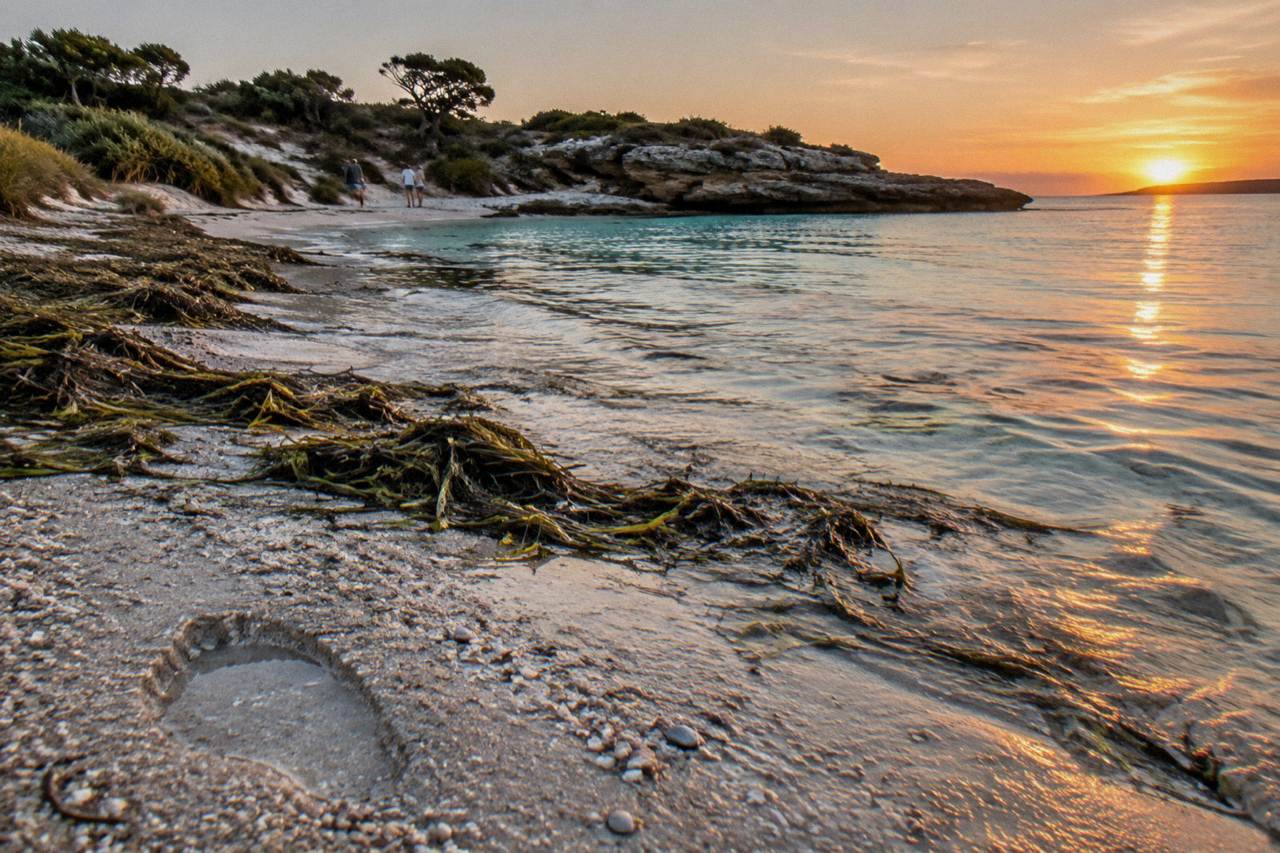
Rottnest Island, known to Whadjuk Noongar people as Wadjemup, is a 19-square-kilometre, vehicle-restricted Class A Reserve holding 63 beaches, 20 bays, more than 135 tropical fish species, 45 km of walking trails, 22 km of cycle paths and the world's largest population of wild quokkas, all within roughly 25 minutes by ferry from Fremantle. No other island on the Australian coast compresses that much coastline, wildlife protection and car-free quiet into a space you can pedal around in a single day. The island sits 19 km from Fremantle Port, 33 km from Perth and 22 km from Hillarys Boat Harbour, close enough that well over a million visitors reach it each year, yet it still feels like a place apart the moment the ferry docks at the Main Jetty in Thomson Bay. Before you pick a bay for your first swim, the guide to Rottnest's best swimming beaches and shark safety explains which coves stay calm and how to read local shark advisories.
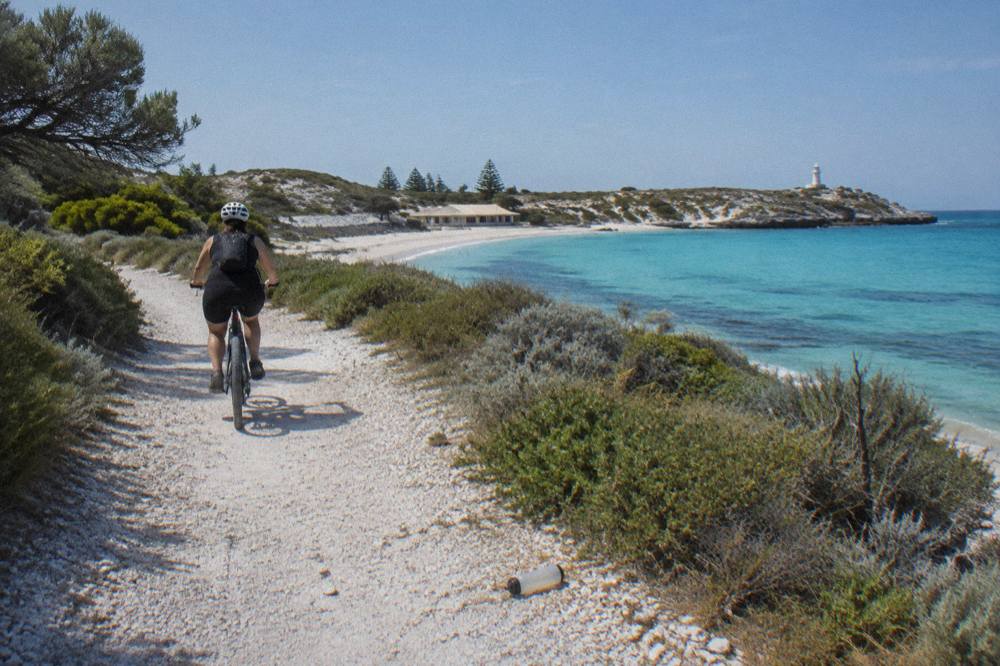
The short version of what makes it special runs like this. It is a reserve, not a resort town: cars are restricted, the ferry fare collects the official island admission fee on behalf of the Rottnest Island Authority, and the whole landmass is managed as a Class A Reserve with every native animal and plant protected. It is a wildlife island: quokkas, a small tree-climbing wallaby found nowhere else in such numbers, plus Australian sea lions, fur seals, dolphins and, from August to December, humpback and southern right whales passing WA waters in their tens of thousands. And it is an island built for slow travel, where the default ways around are a bike, a walking trail or a hop-on hop-off bus.
Three experiences frame almost every first visit. The Rottnest Fast Ferries bike day from Hillarys Boat Harbour is the classic entry point, pairing a 45-minute crossing with a bike and admission from A$124 per person, rated 4.7 from 2,941 reviews, the deepest review pool of any product on the island. On the water, a half-day catamaran snorkel and sail out of Thomson Bay drifts over reefs and shipwrecks with gear included. On land, a private rickshaw tour run by Rotto Rickshaws carries three adults or a family of four around the settlement at walking pace, with a local guide doing the pedalling. Those three together show the island's range, from A$98 simplicity to A$395 seafood cruising and an A$499 tandem skydive.
The rest of this article takes the island's raw figures and shows what each one means on the ground: the bike network, the walking trails, the quokka rules, the marine sanctuaries and the practical realities of getting there. Everything quoted here, from the A$21.50 admission fee to the 63 beaches, comes from official island sources or the operator listings themselves.
The Island In Numbers
The official figures are these: 11 km long, 4.5 km wide, 19 km2 of land, a highest point of 45 m at Wadjemup Lighthouse, 63 beaches, 20 bays, 135-plus tropical fish species, 45 km of walking trails and 22 km of cycle paths and roads. Those numbers come from the island's own location and cycling pages, and they explain the island's shape as a destination better than any superlative does. A landmass that small, with that much coastline, means a beach roughly every 300 metres of shore. A highest point of 45 metres means the hills are real but never long. And 22 km of bike paths circling 11 km of island means a full loop is a day's ride, not a week's.
| Measured feature | Official figure | What it means for a visitor |
|---|---|---|
| Island size | 11 km by 4.5 km, 19 km2 | Bikeable end to end in a day |
| Beaches | 63 | A different bay for every hour of a long weekend |
| Bays | 20 | Sheltered water on most wind directions |
| Tropical fish species | 135+ | Snorkelling is the default water activity |
| Walking trails | 45 km | Multi-day walking without ever repeating |
| Cycle paths and roads | 22 km | Full island loop in 3 to 5 hours |
| Highest point | 45 m | Wadjemup Lighthouse, built 1896 |
| Distance from Fremantle | 19 km | About 25 minutes by ferry |
Two numbers in that table do the most work. The 45 km of walking trails includes the Wadjemup Bidi, the island-wide walking network whose Gabbi Karniny Bidi section alone is a 9.5 km loop through salt lakes and boardwalks from Thomson Bay, taking three to four hours. Bikes are prohibited on the walking trails, which keeps them quiet even on busy summer weekends. The 22 km of cycle paths, meanwhile, splits into three promoted routes: the Rotto Mini Loop at about 4 km and 30 minutes, the 10 km Beaches, Lighthouses and Lakes ride at 1.5 to 3 hours, and the full 22 km island loop at 3 to 5 hours with some challenging hills, suited to experienced riders.
The comparison between those two networks matters for anyone planning a first trip. Our guide to the best bike route around the island covers the full loop in detail, and the ferry-and-bike packages page works through which operator bundles a bike with the crossing. The short summary: if your day is short, ride the Mini Loop to The Basin and Geordie Bay; if you have a full day and reasonable legs, the 22 km loop with stops at Wadjemup Lighthouse and the West End is the island's signature experience.
Why A Car-Free Island Changes Everything
Rottnest is vehicle-restricted, which means no visitor cars at all, no rental counters, no traffic noise, and movement by bike, foot, the Island Explorer hop-on hop-off bus or the island train, with helmets legally required for every rider. The restriction is the single policy that shapes every hour on the island. It is why the 22 km loop feels like a ride through a national park rather than a commute, why the settlement at Thomson Bay is quiet enough to hear quokkas moving through the undergrowth at dusk, and why the air over the island carries salt and eucalyptus instead of exhaust.
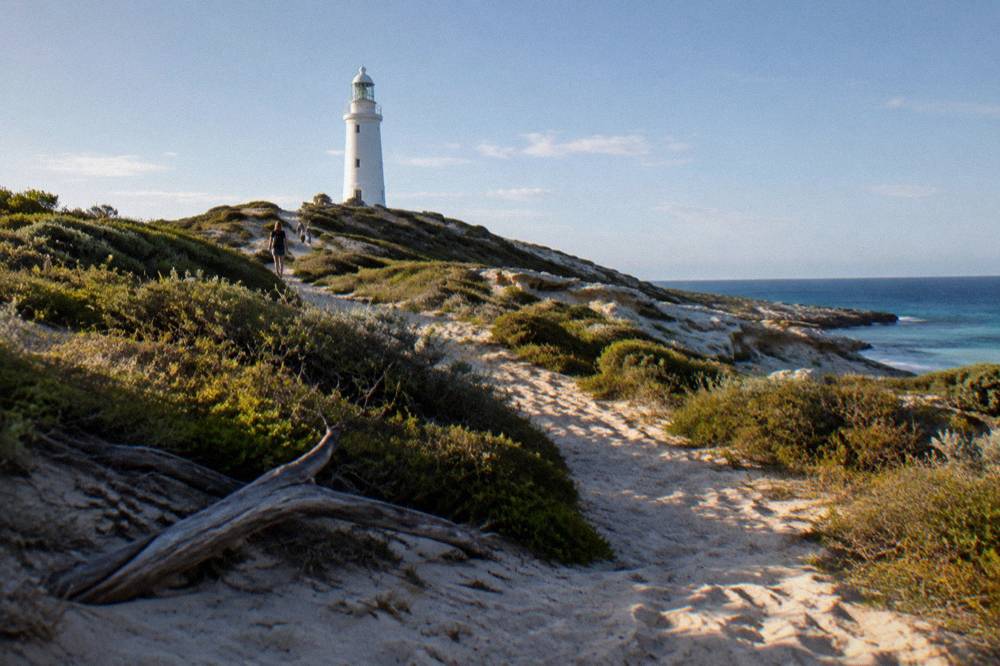
Getting around under that policy costs less than most visitors expect. The main on-island hire specialist, Pedal & Flipper, lists an adult multi-geared bike at A$35 for a day with helmet and lock included, junior bikes at A$22, e-bikes at A$83 for riders 18 and over, and electric scooters at A$79 a day. The ferry operators bundle bikes with crossings too: the Rottnest Fast Ferries package from Hillarys collects your bike at the ticket office, and the Rottnest Express and SeaLink bike days from Fremantle both include hire and the admission fee from A$127 per person. For anyone who would rather not pedal, the Island Explorer bus loop runs 19 stops on a day pass, with adult fares at A$35, concession A$31 and child A$25, plus a temporary A$1 per person fuel surcharge.
The bus is not the only wheels-up option. Australian Pinnacle Tours runs a 4-hour Grand Bus and Train Tour with lunch from A$119 per person, departing the island's railway station in the Settlement, rated 4.6 from 121 reviews, and a 2-hour Oliver Hill train and tunnel tour from A$40 that pairs the island's little train with the wartime gun batteries, rated 4.6 from 35 reviews. The Oliver Hill side of the island, including the physically demanding 700-metre walk and 240-plus steps of the tunnels section, is covered in detail on our lighthouse and Oliver Hill guide. The combined point is simple: the car ban does not limit the island, it distributes everyone across it more evenly than any road network would.
Quokkas, And Why The Rules Are Strict
Rottnest holds the world's largest wild quokka population, a vulnerable species under national environment law, with island numbers fluctuating between roughly 10,000 and 12,000 at seasonal peaks, and the rules are absolute: observe from a safe distance, do not touch, do not feed, and stay on the paths. Quokkas are a small wallaby, mainly nocturnal, capable of climbing trees, and most active early morning and late afternoon. Deliberate interference, including feeding, can draw an on-the-spot fine under the Rottnest Island Regulations 1988 and potential prosecution with fines up to A$10,000. Rangers patrol. The species is listed as Vulnerable under the EPBC Act, and the island's predator-free status is the reason its subpopulation outnumbers the entire mainland total, which federal conservation planning puts at just 3,000 to 4,000 animals. If you're curious whether these marsupials survive anywhere beyond the island, our guide to where quokkas actually live in the wild explains the mainland subpopulations and how to see them responsibly.
The rules exist because the animals' own curiosity works against them. Quokkas approach people, particularly around the Thomson Bay settlement where food and water are concentrated, and a quokka that learns to associate humans with food is a quokka at risk. The official guidance is to use camera zoom for a safe distance and to step back slowly if one comes near. No tour on the island promises a quokka sighting or a close encounter, and none is allowed to: they are wild animals distributed across the whole island, commonly seen near the settlement and in the quieter bays, best at dawn and dusk or in shade. Joeys appear in the pouch from about August and take their first hops around September, which makes late winter and early spring the most rewarding months for patient observation from a distance.
Two island products put you in quokka territory at the right pace without any promise of contact. The 1-hour Settlement segway tour, rated 4.7 from 63 reviews at A$98, and the 1.5-hour Fortress Adventure segway tour, rated 4.8 from 117 reviews at A$139, both run from Bedford Avenue in the Settlement with a maximum of 10 riders per group on the fortress route. Quieter still, the private rickshaw tour run by Rotto Rickshaws departs Frankie's on Rotto and carries up to three adults or a family of four for 1.5 hours at A$145 per person, rated 5 from 15 reviews. It is a slow, guided roll through the settlement, and like every product here, what it offers is the habitat, not the animal on demand. The wider story of the species, and the questions people ask about it, are covered in our quokka locations guide.
Water: Sanctuaries, Wrecks And Whales
The island's waters hold five marine sanctuary zones where fishing and collecting are prohibited, including Kingston in Thomson Bay protecting four shipwrecks and Parker Point protecting pink pocillopora coral, plus two marked snorkel trails, in a reserve of roughly 400 fish species and 20 coral species. The sanctuary map is the underwater version of the car ban: it is the reason the snorkelling here is unusually good so close to a capital city. Parker Point's trail runs about 800 m with 12 interpretive seabed plaques, an hour in the water, 17 minutes by bike from Thomson Bay and stop 5 on the Island Explorer loop. Little Salmon Bay's trail is a 700 m loop with 10 buoys marking marine life. Both are suitable for confident snorkellers with fins and a degree of fitness.
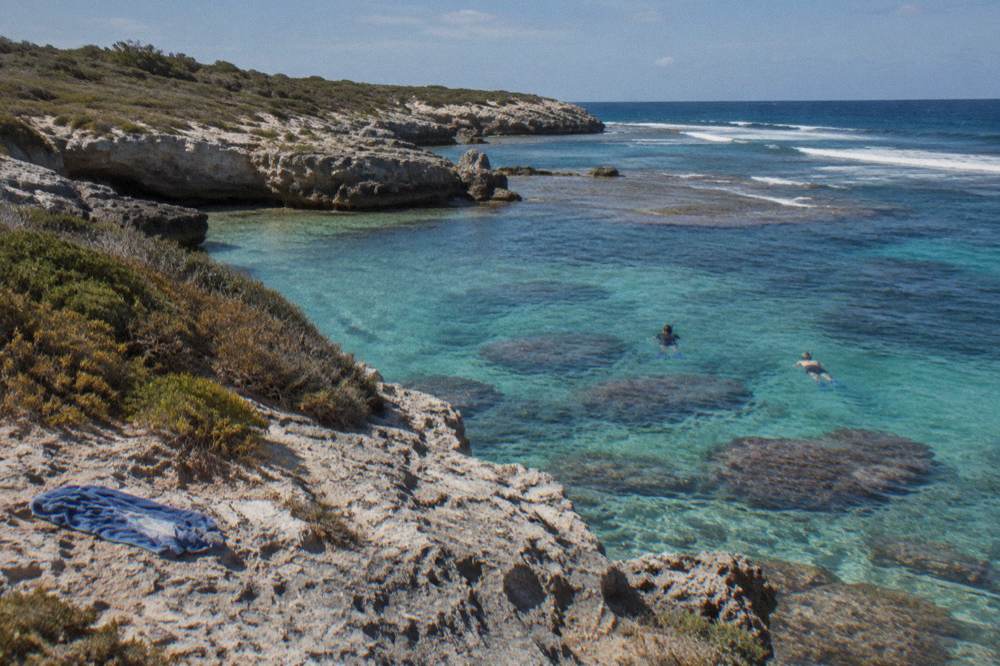
The guided options on the water span a wide price band, and the differences are mostly about boat and depth. Rottnest Snorkel's 3-hour guided boat experience, rated 4.5 from 51 reviews at A$239 per person, runs from the Fuel Jetty on Colebatch Ave with roughly 10 snorkellers per in-water guide, and its season reopens in mid-October each year. The half-day catamaran snorkel and sail run by Charter 1, rated 4.8 from 33 reviews at A$185 for three hours, includes full gear, kayaks and stand-up paddleboards alongside the snorkelling, with a fruit platter on deck; it departs the Thomson Bay Fuel Jetty and, being island-based, requires you to already be on Rottnest. At the far end, the Luxe Island Seafood Cruise by Rottnest Cruises, 4.9 from 56 reviews at A$395 for a 4-hour seated seafood meal on the water, does not run in winter. Our snorkelling tours and spots guide works through all of them bay by bay.
Above the waterline, the island doubles as a whale-watching platform. The Perth-region season runs August to December, with sightings sometimes from June and July, as roughly 35,000 humpback, southern right whales and their calves migrate through WA waters. Sightings are possible from the ferry and from island lookouts, and no operator guarantees them. The season stacks neatly on top of the warm-water window: sea temperatures make swimming comfortable from around November, the island's own climate page puts summer averages near 26 C and winter near 18 C, and swimming is possible year-round, with many winter swimmers wearing wetsuits thanks to the Leeuwin Current.
Getting There, And What The Fare Actually Buys
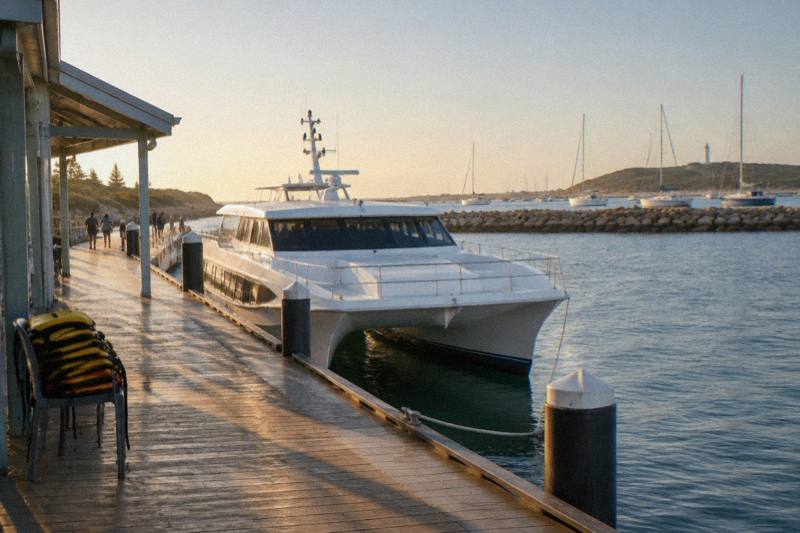
Three ferry operators run to the island from four mainland departure points, with crossings of about 25 minutes from Fremantle, 45 minutes from Hillarys and up to 90 minutes from Barrack Street Jetty, and every fare carries the island admission fee collected on behalf of the Rottnest Island Authority. The operators are SeaLink Rottnest Island, Rottnest Fast Ferries and Rottnest Express. Fremantle departures use B Shed at Victoria Quay and Northport at Rous Head, Perth departures use Barrack Street Jetty at Elizabeth Quay, and Rottnest Fast Ferries sails daily from Hillarys Boat Harbour, where parking is free and hotel transfers from Perth are complimentary. All ferries arrive at the Main Jetty in Thomson Bay.
The admission component is the part of the fare most first-time visitors miss. Single-day admission is A$21.50 per adult, A$11 per child aged 4 to 16 and A$57 for a family of two adults and two children, with under-4s free; overnight visitors pay the extended-stay rate of A$28.50 adult instead. Every ferry and tour listing on this site that shows a ferry flag has that fee built in, which is why an island-only product like the Oliver Hill train tour can cost A$40 while the cheapest ferry-and-admission days from Fremantle start near A$90. The fee funds the island's management as a Class A Reserve, from ranger patrols to the walking-trail network.
| Product | Price from | Includes ferry | Includes admission | Rating and reviews |
|---|---|---|---|---|
| Hillarys ferry and bike day, Rottnest Fast Ferries | A$124 | Yes | Yes | 4.7 from 2,941 reviews |
| Fremantle ferry and bike day, Rottnest Express | A$127 | Yes | Yes | 4.7 from 948 reviews |
| SeaLink ferry and bike package, Fremantle | A$127 | Yes | Yes | 4.8 from 503 reviews |
| Fremantle ferry and admission, SeaLink | A$90 | Yes | Yes | 4.7 from 580 reviews |
| SeaLink ferry and bus tour, Perth or Fremantle | A$149 | Yes | Yes | 4.6 from 1,515 reviews |
| Grand Island day tour with lunch, Hillarys | A$199 | Yes | Yes | 4.4 from 671 reviews |
| Catamaran snorkel and sail, island-based | A$185 | No | Not stated | 4.8 from 33 reviews |
| Private rickshaw tour, island-based | A$145 | No | Not stated | 5 from 15 reviews |
Choosing among them is mostly a question of where you are staying and how you want to spend the hours on the island. From Perth's western suburbs, the Hillarys crossing is the shortest drive and the 45-minute sailing, with the Rottnest Fast Ferries bike day at 4.7 from 2,941 reviews the most-reviewed way to bundle it. From the city centre, the 9-hour Rottnest Express trip from Barrack Street Jetty at A$175 offers hotel pickup from select Perth city hotels, phone-ahead and subject to availability, turning the 90-minute river-and-sea crossing into part of the day out rather than dead time. From Fremantle, the Rottnest Express and SeaLink bike days are near-identical in price and inclusions, and both often sell out in peak summer. Our ferry fares and tickets guide compares every crossing in detail.
Is One Day Enough To See What Makes It Special?
One full day is enough to bike the western loop or the 10 km Beaches, Lighthouses and Lakes route, snorkel one bay, and spend time with the settlement and its quokka habitat, but the full 22 km loop plus a boat tour plus the West End generally needs an overnight stay. The honest answer depends on pace. A day tripper on the first ferry from Fremantle gets roughly seven hours on the island. That comfortably holds the Mini Loop to The Basin, an hour at Parker Point or Little Salmon Bay, lunch in the settlement and a slow afternoon with the quokka habitat near Thomson Bay. It does not comfortably hold the full island loop and a 3-hour catamaran sail and the Oliver Hill train, which is why the overnight question is worth taking seriously. If you decide a day trip is the right call, the detailed single-day Rottnest itinerary covers the first ferry, the bike loop, a snorkel stop and the quokkas so nothing gets squeezed out.
Staying over changes the character of the place entirely. The island's official accommodation releases bookings one month at a time, nine months in advance, on the first Wednesday of each month, and the quokka hours that day trippers miss, the hour after dusk and the hour before the first ferry, are when the settlement is at its most quietly wild. Our pages on how many hours you need and where to stay on the island cover the trade-off in depth. For a first visit, though, the single day done well, bike off the ferry, bays in the middle, settlement at the end, delivers the core of what makes the island special: the density of coast, the absence of cars and the wildlife moving through it all.
The last thing worth knowing is that the island rewards the early ferry in every season. Quokkas are most active early morning and late afternoon, summer's busiest stretch is December to February, warm-water activities run September to April, and winter suits hiking and wildlife-watching with a wetsuit for swimming. Whatever the month, the same logic holds: the island is small, but 63 beaches do not fit in one hurried afternoon, and the visitors who get the most from it are the ones who pick a corner of the map and give it the whole day. Rottnest Island Tours exists to help you pick that corner, and the three products below are the three ways most first-timers do it.
Common Questions About Rottnest Island
What Is So Special About Rottnest Island?
Its density of protected coast and wildlife in a car-free space: 63 beaches, 20 bays, 135-plus tropical fish species, 45 km of walking trails and 22 km of cycle paths across 19 km2 of Class A Reserve, holding the world's largest wild quokka population, all about 25 minutes by ferry from Fremantle.
Can you touch or feed the quokkas on Rottnest Island?
No. The rules are observe from a safe distance, do not touch, do not feed and stay on the paths. Deliberate interference can draw an on-the-spot fine and potential prosecution with fines up to A$10,000.
Do you need a bike on Rottnest Island?
It is the default way around, but not compulsory. The Island Explorer bus loop covers 19 stops, walking trails cover 45 km, and the island train and bus tours reach Oliver Hill and the West End. Bikes cost from A$35 a day to hire on the island, or come bundled with most ferry packages.
What does the ferry fare include?
The island admission fee, A$21.50 per adult for a single day, is collected by ferry operators on behalf of the Rottnest Island Authority inside the fare. Ferry-and-bike packages also include a bike. Meals are separate unless the listing states lunch is included, as the Grand Island day tour does.
When can you see whales from Rottnest Island?
The Perth-region whale season runs August to December, with sightings sometimes from June and July, as roughly 35,000 whales migrate through WA waters. Sightings are possible from ferries and island lookouts and are never guaranteed.
Are there cars on Rottnest Island?
No. The island is vehicle-restricted, with movement by bike, foot, the hop-on hop-off bus, the island train and small electric shuttles. Helmets are legally required for all bike and scooter riders.