Why Can't I Touch A Quokka?
The quokka rules on Rottnest Island explained: why touching and feeding are banned, what the fines are, and the tours that show quokkas the right way.
Why Can't I Touch A Quokka?
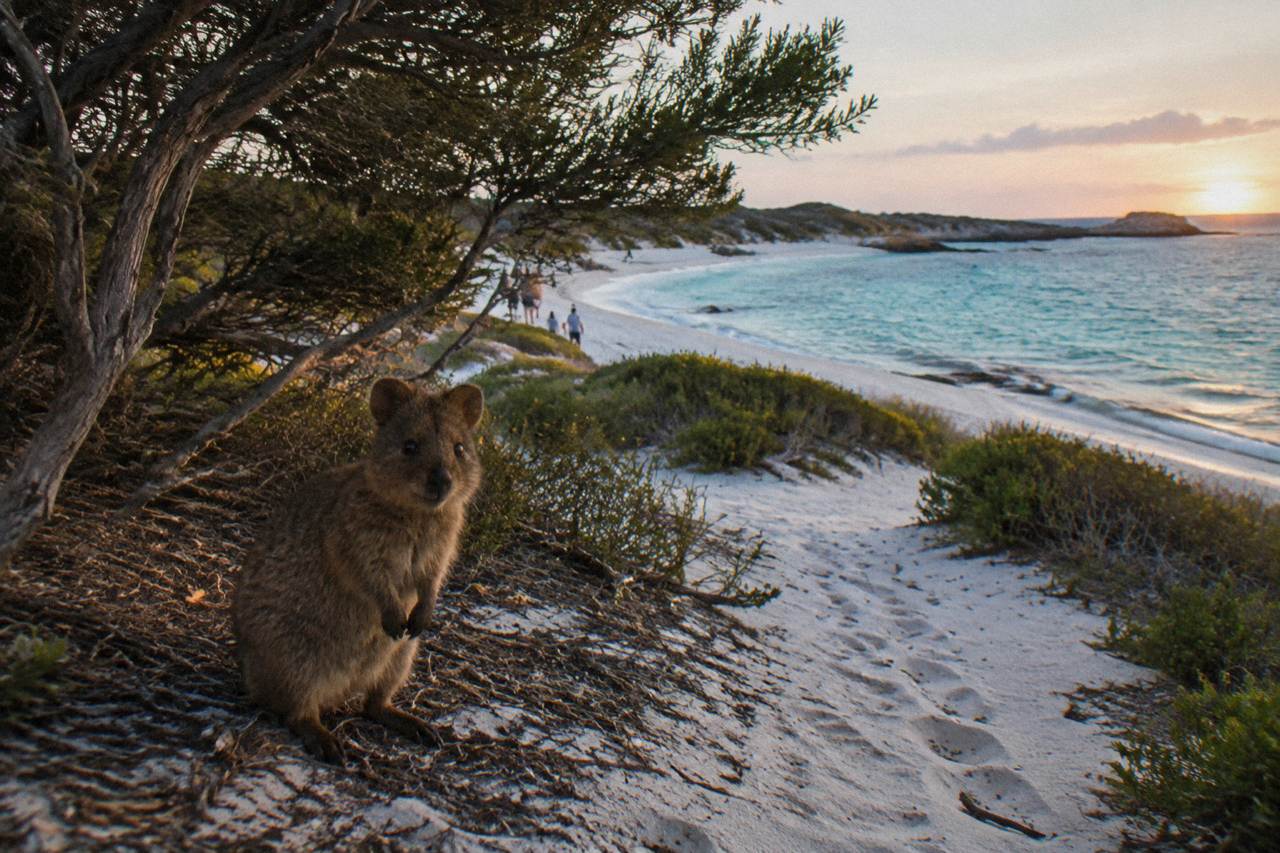
You cannot touch a quokka because quokkas are protected wild animals, and Rottnest Island's rules are explicit: observe from a safe distance, do not touch, do not feed, and stay on the paths. Deliberate interference can draw an on-the-spot fine under the Rottnest Island Regulations 1988 and potential prosecution with fines up to A$10,000. The rules protect the animal, and they protect you. If their calm, smiling demeanor makes you wonder whether they genuinely enjoy human company, our guide to how friendly quokkas really are explains what their behavior means and which tours let you see them without breaking the rules.
That is the short answer, but the reasoning behind it is worth understanding, because it changes how you experience the island. A quokka is not a petting-zoo animal that happens to live outdoors. It is a small macropod, a relative of kangaroos and wallabies, that has thrived on Rottnest, known to Whadjuk Noongar people as Wadjemup, precisely because the island is a predator-free Class A Reserve with strict protections. The quokka is listed as Vulnerable under national environment law. The island population is the largest in the world, and it fluctuates seasonally between roughly 10,000 and 12,000 animals according to the federal environment department's species page. That number is healthy, but it is not a cushion: the species as a whole remains at risk, and the mainland subpopulations in Western Australia are far smaller. If you're wondering where else these animals survive beyond the island, our guide on where quokkas actually live across Western Australia covers the scattered mainland groups and how to spot them responsibly.
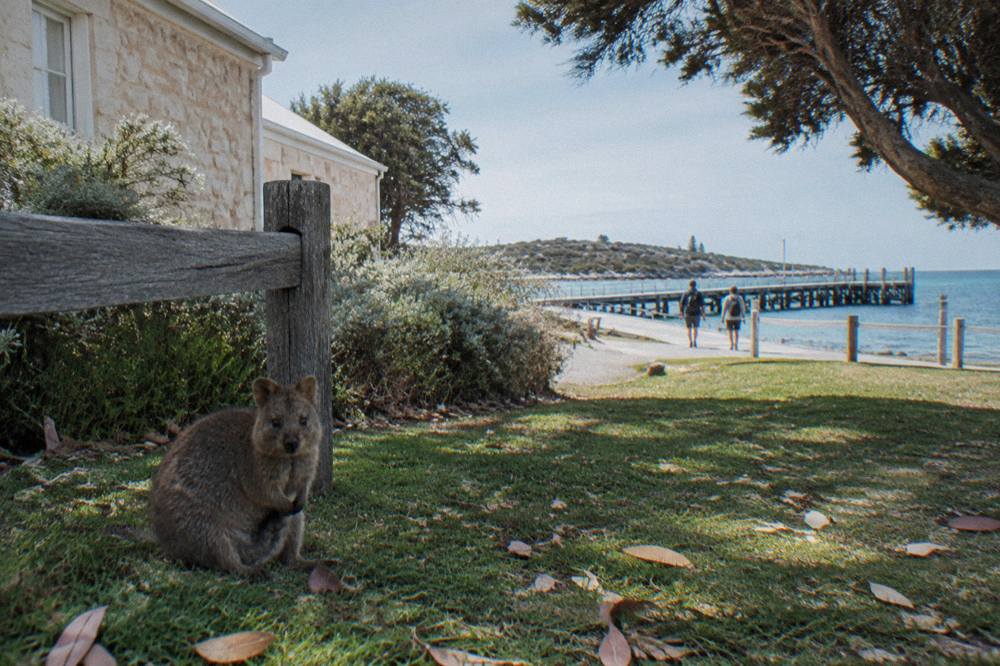
So when a visitor reaches out to pat one, or holds out a snack to lure it closer for a photo, the harm is not hypothetical. Human food damages quokkas directly, and habituation, the process where wild animals learn to approach people for handouts, degrades the very behaviour that makes them wild. The island's managers, the Rottnest Island Authority, put the rules plainly on their protect-our-wildlife page, and rangers patrol to enforce them.
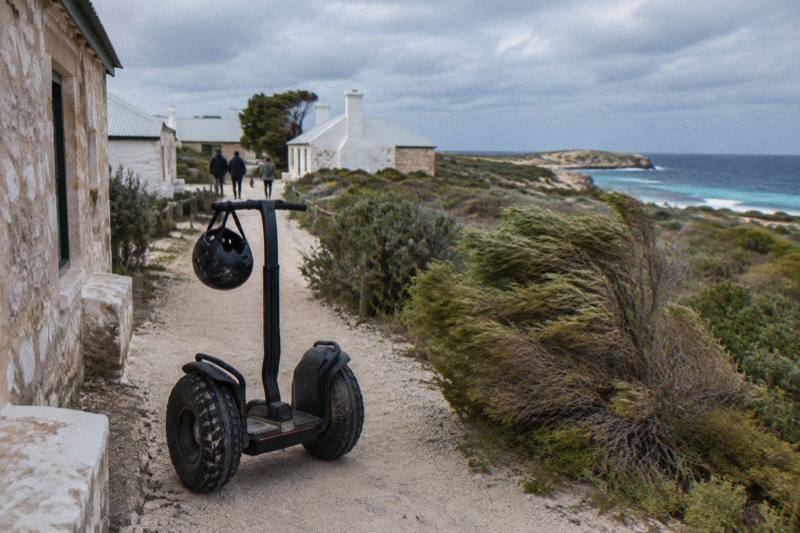
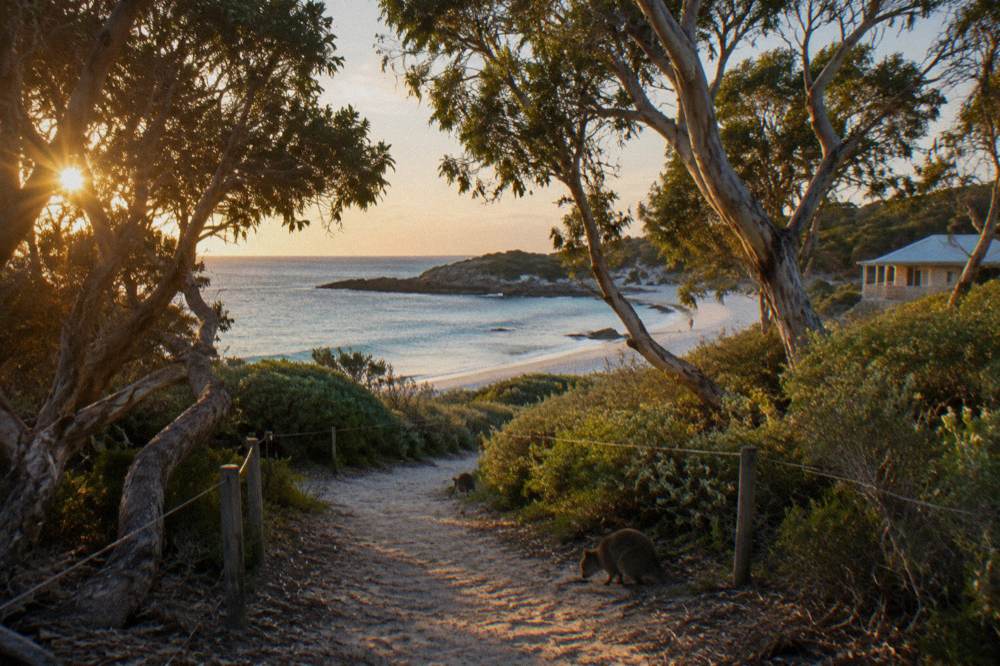
The good news is that none of this makes quokkas hard to enjoy. They are curious, they are active around the settlement at dawn and dusk, and a respectful distance of a few metres with a camera zoom produces better photographs than a stressed animal lunging at a sandwich ever will. Several tours on the island, including the private Rottnest rickshaw tour and the Segway tours around the Settlement, are built around seeing quokkas on their terms. If a quokka wanders toward you, the official guidance is to step back slowly and let it pass. If you have ever wondered how one of those close encounters might turn out, what happens if a quokka actually bites you lays out the official guidance in plain terms.
What Are The Quokka Rules On Rottnest Island?
The rules are fourfold: observe quokkas from a safe distance, do not touch them, do not feed them or give them water, and stay on the designated paths. The Rottnest Island Authority states these rules on its official wildlife pages, and they apply to every visitor, everywhere on the island, year-round. Breaking them is not a technicality, it is an offence with real penalties attached.
The wording comes straight from the official pages, and it is worth repeating exactly because each clause does different work. Observing from a safe distance keeps the animal behaving naturally. Not touching prevents injury and disease transmission in both directions. Not feeding, and that includes water, protects quokka digestion and stops them associating humans with food. Staying on paths protects the broader habitat, which is a Class A Reserve, the highest level of protection for crown land in Western Australia.
If a quokka approaches you, and in the settlement area they often do, the guidance is to step back slowly rather than hold your ground or reach out. Use your camera's zoom rather than your feet to close the distance. The island's rangers can be reached on (+61 8) 9372 9788 if you find a sick or injured animal, and the right response is to report it, never to intervene yourself.
Here is the rules summary in one place:
| Rule | What it means in practice | Why it matters |
|---|---|---|
| Observe from a safe distance | Stay metres back, use camera zoom | Keeps quokka behaviour natural and unstressed |
| Do not touch | No patting, no holding, no guiding by hand | Prevents injury and disease spread both ways |
| Do not feed or give water | No food, no drinks, nothing offered ever | Human food harms quokka health and creates dependence |
| Stay on the paths | Use designated paths and trails | Protects habitat across the Class A Reserve |
The paths rule connects to something many visitors miss: Rottnest has 45 km of walking trails and 22 km of cycle paths, and bikes are prohibited on the walking trails. Quokka habitat and visitor infrastructure are deliberately kept somewhat apart. If you want a deeper look at where quokkas actually hang out, the guide to seeing quokkas across Rottnest maps the reliable spots, and the piece on the best times of day to find quokkas explains the dawn-and-dusk pattern.
The same official pages make clear that these rules are not unique to quokkas, even though quokkas are the animal most visitors come for. All native wildlife on the island falls under the same protections, from the skinks that sun themselves on boardwalks to the birdlife around the salt lakes. A visitor who follows the four rules for quokkas is, without any extra effort, following them for everything else on Wadjemup too. That consistency is deliberate: a single set of habits protects an entire ecosystem, and rangers enforce one standard rather than a species-by-species patchwork.
Why Do The Rules Exist? Quokkas Are Wild, Not Tame
The rules exist because a quokka is a wild animal whose survival depends on staying wild. Human contact spreads disease, human food causes serious health harm, and handouts teach quokkas to depend on visitors instead of their natural diet. A population that looks abundant is still a Vulnerable species, so every interaction that changes quokka behaviour works against twenty years of conservation.
Start with the biology. Quokkas are mainly nocturnal, they can climb trees, and they have evolved to browse on native vegetation across a range of habitats. Their digestive systems are built for that diet, not for chips, fruit, bread or whatever else a visitor might hold out. Feeding wildlife is not a neutral act of kindness; it is the single most common way well-meaning visitors cause harm. The official rules name food and water explicitly for this reason.
Contact brings its own risks. Touching a wild animal stresses it, and a stressed quokka may abandon a spot it was using for shelter or feeding. Disease can move in both directions between humans and wildlife, which is why the no-touch rule is standard practice in protected reserves everywhere, not just on Rottnest. And quokkas, for all their relaxed appearance, are still macropods with strong hind legs and claws; no interaction with a cornered wild animal ends well for either party.
Then there is habituation. A quokka that learns people equal food loses the foraging behaviour that keeps it alive through the island's dry summers, and it starts approaching the wrong people, including the ones who report it or worse. The Rottnest Volunteer Guides, who run free daily walking tours from the historic Salt Store, including one walk literally called Meet the Quokkas, teach visitors to watch without interfering. That is the model the whole island runs on.
There is also a seasonal dimension worth knowing. Joeys begin appearing in the pouch around August and take their first hops around September, which means the later winter and spring months carry mothers with dependent young. An interaction that seems trivial to an adult visitor, a hand extended, a bag of food left open, can matter more during those months, when a mother interrupted mid-feeding is a mother whose joey misses a meal. The rules do not change with the seasons, but the stakes underneath them do.
None of this means quokkas are fragile creatures to be viewed from behind glass. They are, across most of the island, abundant and visibly thriving. But abundance on one small island is not security, and the species' Vulnerable listing is the proof. The mainland population collapsed to a few thousand animals, largely through habitat loss and introduced predators, and Rottnest is the stronghold. The rules are what keep it that way.
What Happens If You Touch Or Feed A Quokka?
Deliberate interference with quokkas, including feeding, can draw an on-the-spot fine under the Rottnest Island Regulations 1988, and potential prosecution under the Wildlife Conservation Act 1950 with fines up to A$10,000. Rangers patrol the island regularly, and the rules apply to all native wildlife, not just quokkas. Ignorance is not treated as a defence.
The enforcement picture is tiered. The on-the-spot fine is the immediate consequence a ranger can issue when they see interference happen. Prosecution is the escalation path for serious cases, and the A$10,000 ceiling on those fines is the figure the official pages state. Animal cruelty offences carry far heavier maximum penalties under Western Australian law, though those apply to a different category of conduct than a tourist holding out a piece of fruit.
What trips visitors up most often is not malice but staging. The classic scenario: a visitor crouches with food to lure a quokka into frame, or gently nudges one into position for a selfie. Both are interference. The official guidance on photography is the opposite approach, use the zoom, keep your distance, and if a quokka comes to you, step back slowly and let it move on. A photo taken at 3 metres with a zoom lens is legal, calm and usually better composed than anything taken during a scramble.
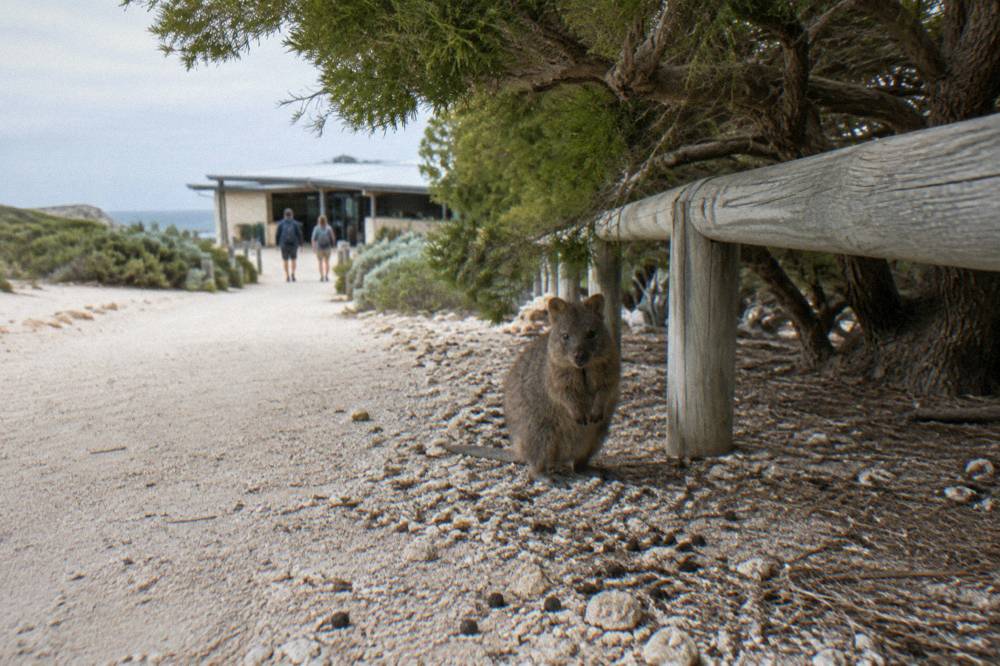
The rules protect everything on the island, not only its famous marsupial. King's skinks, birdlife, marine animals and all native flora fall under the same reserve protections, and the five marine sanctuary zones around the coast carry their own fishing and collecting bans. A useful habit on Rottnest is to assume protection is the default and interaction is the exception.
One more clarification worth making, because the question gets asked in a darker form: quokka bites and health incidents are not something this site speculates about, and no verified statistics exist to cite. The reason not to touch a quokka is not that quokkas are dangerous. It is that touching them is against the rules, bad for them, and unnecessary.
How Should You Behave When A Quokka Approaches You?
When a quokka approaches, stop, stay still or step back slowly, and never reach toward it. Keep food packed away, let the animal move past on its own terms, and take your photo with zoom from where you stand. Quokkas in the settlement area are used to people, so approaches are common, and calm restraint is all that is required of you.
The settlement around Thomson Bay is where most quokka encounters happen, because that is where shade, water sources and shelter concentrate, and where the animals have learned humans are usually harmless. An approach is not an invitation. It is usually a quokka following a smell, exploring, or simply crossing a space you happen to occupy. Step back slowly, give it a clear line to keep walking, and it will.
Photography deserves its own note. The quokka selfie became famous, and the official position is that photos are fine when the animal controls the encounter. You crouch or stand at a distance, the quokka does whatever it does, and you capture that. What is not fine is baiting, blocking, cornering or touching to compose the shot. If your photo required the quokka to change its behaviour because of something you did, reconsider the photo.
Guides help here more than most visitors expect. The volunteer guides' Meet the Quokkas walk teaches the observation habits in person, and the commercial tours build the same discipline into their routes. The one-hour Settlement Segway tour from Segway Tours WA, rated 4.7 from 63 reviews and priced from A$98 per person, glides through the settlement's quokka territory at a pace and distance that suits the animals, and its guide covers the rules as part of the briefing. Free cancellation applies.
The same logic runs through the island's other guided products. The Rottnest ferry and bus tour roster includes commentary-led circuits where drivers know where quokkas gather and stop at lawful viewing distance. None of these tours promise a sighting, and any that claimed to guarantee quokka contact would be breaking the spirit of the rules themselves. Wild means wild, and the honest operators say so.
Which Tours Show You Quokkas Without Breaking The Rules?
The tours that respect the rules are the ones that bring you to quokka habitat with a guide and leave the animals in charge: the private rickshaw tour around Thomson Bay, the Settlement and Fortress Segway tours, the ferry and bus sightseeing circuits, and the volunteer guides' free walks. Each keeps a respectful distance, none offers contact, and several include the rules in their commentary.
The standout for a quokka-focused visit is the private Rottnest rickshaw tour, run by Rotto Rickshaws from Frankie's on Rotto in Thomson Bay. It carries up to three adults or a family of four, runs about 1.5 hours, is priced from A$145 per person, and holds a 5.0 rating from 15 reviews, a small pool but a perfect one. Because it is private, the pace adapts to what you encounter, and the operator's whole premise, relaxed discovery, matches the no-interference ethos. Free cancellation applies.
For visitors arriving without a tour booked, this comparison covers the main rules-respecting options:
| Tour | Operator | Price from | Duration | How it shows quokkas |
|---|---|---|---|---|
| Private rickshaw tour | Rotto Rickshaws | A$145 per person | 1.5 hours | Private paced loop of Thomson Bay habitat |
| Settlement Segway tour | Segway Tours WA | A$98 per person | 1 hour | Guided glide through settlement quokka territory |
| Fortress Adventure Segway | Segway Tours WA | A$139 per person | 1.5 hours | Quieter routes toward the fortress end of the island |
| SeaLink ferry and bus tour | SeaLink Rottnest Island | A$149 per person | 7 hours to full day | Commentary circuit with stops near reliable habitat |
The Segway options deserve a note on suitability. The one-hour Settlement tour is the easy introduction, while the Fortress Adventure Segway tour, 4.8 from 117 reviews and from A$139 per person, pushes toward the island's military heritage with a maximum of 10 riders per group, which keeps the footprint small. Both brief riders on wildlife rules before departure, and both start from Bedford Ave in the Settlement, a short walk from the Main Jetty where every ferry arrives.
If you are planning the wider day, the SeaLink ferry and bus tour, 4.6 from 1,515 reviews and from A$149 per person, bundles the crossing from Perth or Fremantle with a commentary bus circuit of the island's highlights, admission included, and it often sells out in peak season. It is the format for visitors who want quokkas as part of a full island circuit rather than the sole focus, and it pairs well with an afternoon on foot around the settlement.
For complete planning, this site, Rottnest Island Tours, covers every bookable way to see the island, and the practical questions most visitors ask next are about cost and timing. The breakdown of what a Rottnest day trip costs and the verdict on whether one day is enough both factor in the tours above.
The deeper point is that rules-respecting tourism is not a compromise, it is the better product. A guide who knows where quokkas feed at dusk, who can park you three metres away at the right moment, and who can explain what you are watching, delivers more than any staged encounter could. The quokka does what it wants either way. The only question is whether you are there at the right time, quietly, with someone who knows the island.
Common Questions About Touching Quokkas
Why Can't I Touch A Quokka?
Quokkas are protected wild animals on a Class A Reserve. The rules are to observe from a safe distance, do not touch, do not feed, and stay on the paths. Deliberate interference can draw an on-the-spot fine and potential prosecution with fines up to A$10,000.
Can you get fined for feeding a quokka on Rottnest?
Yes. Feeding is treated as deliberate interference with wildlife and can draw an on-the-spot fine under the Rottnest Island Regulations 1988, with potential prosecution and fines up to A$10,000. This includes offering food or water.
What should I do if a quokka comes up to me?
Stop, stay still or step back slowly, and let the animal pass. Keep food packed away and take any photo with your camera zoom rather than moving closer. Never reach toward it or try to guide it.
Is it illegal to take a quokka selfie?
No, when the quokka controls the encounter. Photos taken at a distance with zoom, where the animal is behaving naturally and has not been lured, blocked or touched, are within the rules. Staging a selfie with food or contact is not.
Do any tours let you hold or pat a quokka?
No, and no legitimate operator would offer it. The rickshaw, Segway and bus tours all show quokkas at a respectful distance with a guide, and the free volunteer-guided walks teach the same observation habits.
Where is the best place to see quokkas on Rottnest?
Quokkas are found right across the island, with family groups common in and near the Thomson Bay settlement. They are mainly nocturnal and most active early morning and late afternoon, so timing matters as much as location.