When To See Quokkas On Rottnest Island?
The best times of day and seasons to see quokkas on Rottnest Island, where to look, the rules that protect them, and the tours that time their days around quokka activity.
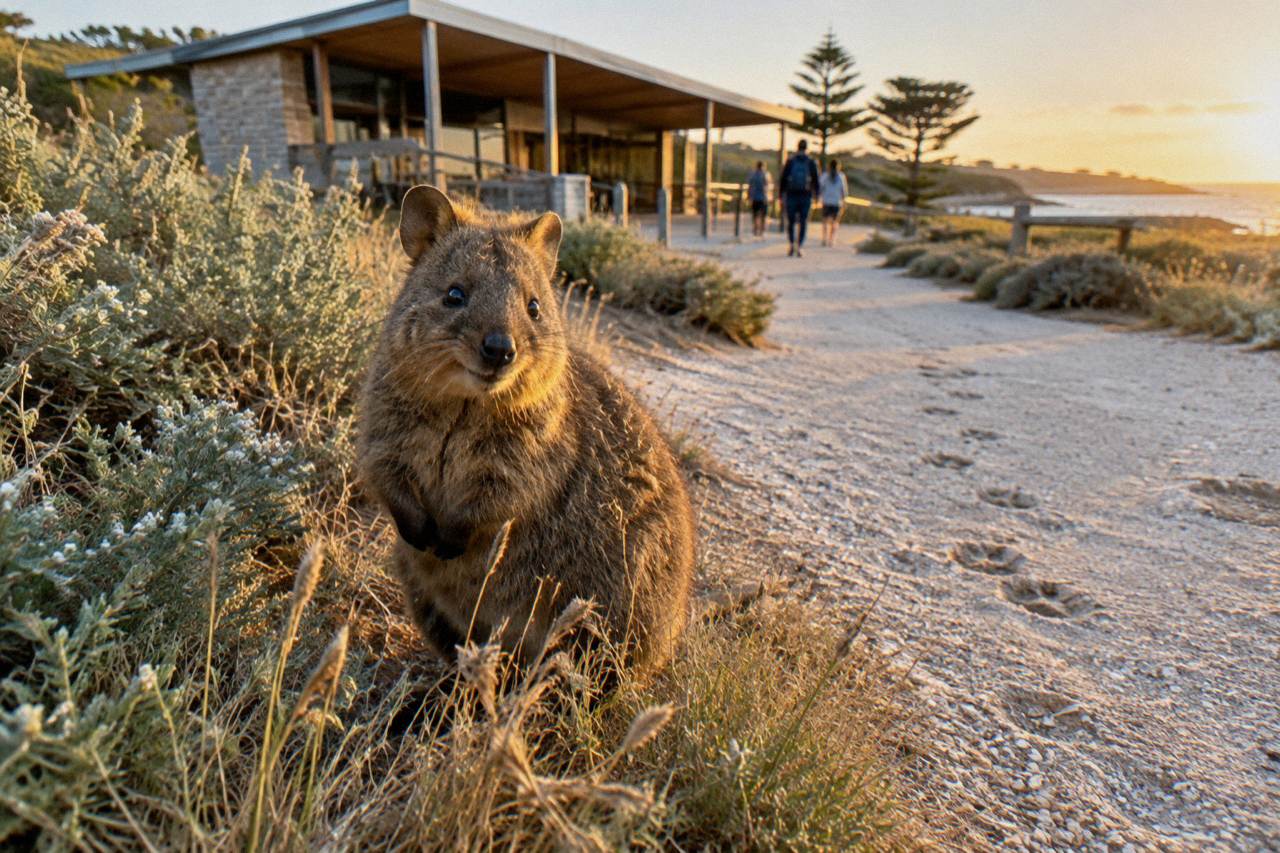
The best time to see quokkas on Rottnest Island is early morning, roughly the first two hours after sunrise, and again in the late afternoon as the day cools. Quokkas are mainly nocturnal, most active early morning and late afternoon, and they retreat into shade through the middle of the day, so a ferry that lands at 11 am puts you on the island at the single worst hour for sightings. Go early, go late, or plan to be somewhere cool and shaded yourself until they reappear in the hours before your return sailing.
That timing is not folklore, it is the official guidance. The Rottnest Island Authority's wildlife pages describe quokkas as mainly nocturnal small wallabies that are most active early morning and late afternoon, and they add the detail most visitors never hear: quokkas can climb trees, and the island carries the world's largest quokka population. The island is 19 square kilometres, 11 km long by 4.5 km wide, and quokkas are found right across it, not just in the photo corners of the settlement. If you're wondering whether Rottnest is their only home, the breakdown of where else quokkas live covers the mainland populations and how to see them responsibly.
Timing matters in a second way too, the seasonal one. Joeys appear in the pouch from about August and take their first hops around September, which makes late winter and spring the months with the most quokka life visible at once. Pair the right hour with the right month and even a day trip from Perth, the Rottnest Fast Ferries bike day from Hillarys among them, gives you a genuine chance of crossing paths with them, though no honest guide will promise a sighting of any wild animal, and this article will not either.
When To See Quokkas On Rottnest Island?
The two windows to aim for are early morning and late afternoon, and both give you a realistic chance of crossing paths with quokkas on Rottnest Island. If you have flexibility, the first hour after the ferry crowd thins is often the most productive of all, making it the best time to plan your visit around. Quokkas are mainly nocturnal, so they finish feeding around sunrise and become active again as the day cools toward evening. In between, through the middle hours, they shelter in shade and scrub, and you will mostly find the ones dozing under buildings and trees near the Thomson Bay settlement rather than out in the open where day-trippers are looking for them.
The practical version of this: catch one of the first ferries of the day. Crossings run about 25 minutes from Fremantle and 45 from Hillarys, so an early sailing from either port lands you in Thomson Bay while the air is still cool and the quokkas are still finishing their morning. A full-day return ticket, the SeaLink ferry and admission from Fremantle at 4.7 from 580 reviews for instance, buys you both windows, the morning one on arrival and the late-afternoon one before departure, which is exactly why a day trip is long enough for quokkas even though it is short for everything else the island offers.
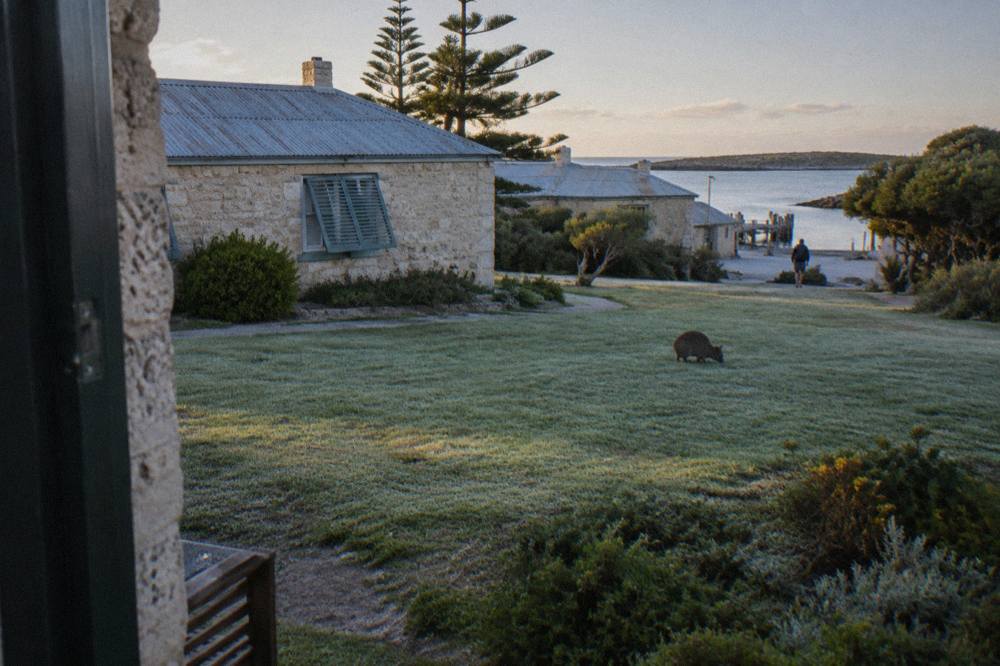
Where the hour and the place meet is the real answer. Family groups are commonly found in and near the settlement because of water and shade, and they also live across the quieter bays and trails, so an early walk from the Main Jetty along the settlement edge, before the bike traffic builds, covers the highest-probability ground. The official pages put it plainly: quokkas are best looked for at dawn and dusk or in shade. Midday, look under trees and buildings rather than on open lawns, and lower your expectations accordingly.
| Time of day | Quokka activity | Where to look | Odds for a visitor |
|---|---|---|---|
| First light to about 8 am | Feeding winds down, animals still moving | Settlement edges, lawns near Thomson Bay | Best of the day |
| Mid-morning to early afternoon | Sheltering from heat | Deep shade under trees, buildings, scrub | Lower, shade spots only |
| Late afternoon to sunset | Animals re-emerge and feed | Settlement, Geordie Bay edge, quiet paths | Excellent |
| After dark | Fully active, feeding | Everywhere, but ferry visitors have left | Not available on a day trip |
The Rottnest Volunteer Guides run free guided walking tours daily from the historic Salt Store, including a walk called Meet the Quokkas with listed example departures at 9:15 am and 2 pm, and times that vary with weather and volunteer availability. A free walk timed to the animals' own schedule is the cheapest quokka strategy on the island, and it pairs neatly with a paid morning, whether that is a ferry-and-bike day or a slower option like the private rickshaw tour, which we will come to. More on where to find them is in the guide to quokka hotspots around the island.
Which Season Has The Most Quokkas?
Spring is the season with the most quokkas to see, and the window runs from late winter through spring, roughly August to October or November. Joeys first appear in the pouch from about August, and by September they begin taking their first hops, so this stretch offers the most visible quokka activity of the year. Summer brings the crowds and the heat that drives quokkas deep into shade by mid-morning, while the cooler months put active animals in the open at more hours of the day. There is no bad season for quokkas on Rottnest, every month carries a population in the hundreds at minimum, but there is a best one, and it is spring.
The joey cycle is the detail worth planning around. Births happen in late summer, the official nature pages explain, and the pouch stage shows from about August, with first independent hops around September. A spring visit can therefore catch mothers with young at foot, which is both the most memorable version of a quokka encounter and the one where the rules matter most, because a mother with a joey needs distance and an escape route far more than a solitary adult does. If spring is your window, book early: the same months carry school holidays and spring weekend demand on the ferries.
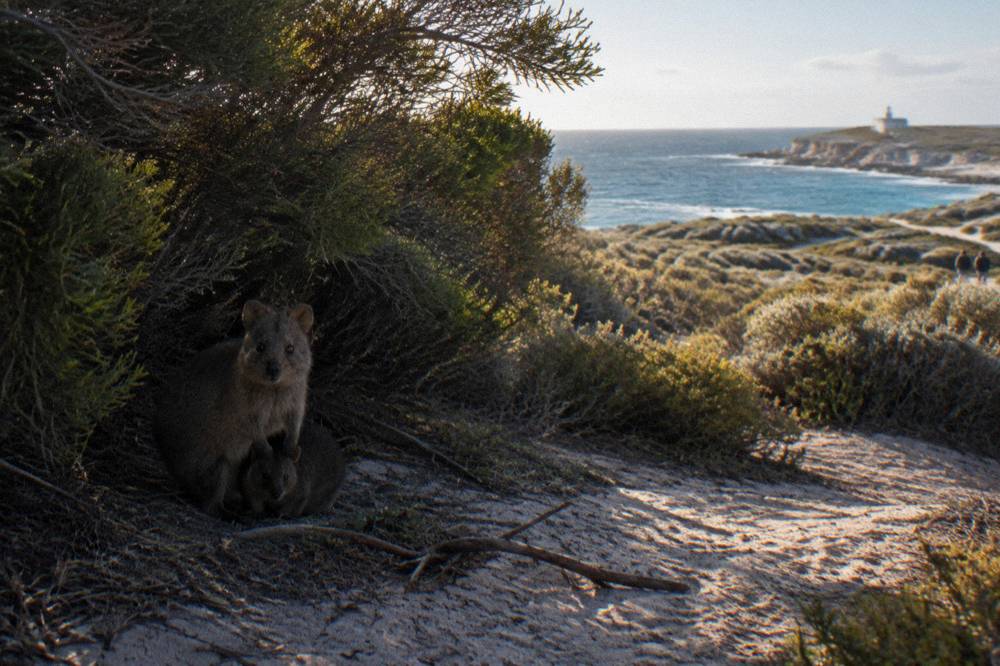
Season also changes the hour. In the heat of a Perth summer, when island averages sit around 26 C, the early-morning window closes quickly and quokkas disappear by mid-morning, so the first ferry matters even more. In winter, when averages sit around 18 C and rain is more common, activity can stretch later into the day. Summer is the busiest season on the island and the warm-water season runs September to April, so a quokka-focused visitor is arguably better served by the shoulder edge of that range, September and October, than by the February peak, and the fuller reasoning lives in the weather and best time to visit guide.
| Season | Months | What it means for quokkas | Notes for planning |
|---|---|---|---|
| Late winter | Jul to Aug | Joeys visible in pouches from about August | Cool days, quiet trails, some rain |
| Spring | Sep to Nov | Joeys take first hops around September, animals active longer | Best overall window |
| Summer | Dec to Feb | Heat drives shade-sheltering by mid-morning | Peak crowds, book ferries early |
| Autumn | Mar to May | Mild, activity returns to normal patterns | Good compromise on crowds |
One honest caveat belongs here. The island's quokka population fluctuates through the year, and the national conservation listing for the species remains Vulnerable even though the Rottnest subpopulation is the world's largest in a predator-free setting. The federal environment department's quokka action plan page records that seasonal fluctuation. What that means for a visitor is simple: quokkas are present year-round and abundant, but a sighting is never a guarantee, and anyone selling you one is selling you something the animal did not agree to.
What Are The Rules Around Quokkas?
The rules around quokkas are straightforward: observe them only from a safe distance, never touch them, never feed them, and stay on the designated paths. These guidelines cover the basics of any encounter, so the safest approach is to enjoy watching the animals from where you stand, keep your hands to yourself, offer no food, and remain on the trail. Deliberate interference with wildlife, which includes feeding, can draw an on-the-spot fine under the Rottnest Island Regulations 1988 and potential prosecution with fines up to A$10,000. The island is a Class A Reserve, rangers patrol it, and the rules exist because fed quokkas become dependent, sick and aggressive over time, not because the authority is precious about photographs or indifferent to visitors who want a picture of their own. If you follow those guidelines, the chance of any trouble is close to zero, but if you're curious about the rare cases, the official guidance on quokka bites explains exactly what to expect.
The official protect-our-wildlife page states the boundaries in full: no touching, no feeding, no offering food or water to any wildlife. The safe-distance principle covers photography too. Use the camera's zoom rather than your feet, and if a quokka approaches you, step back slowly rather than holding your position for the frame. A quokka that walks up to you is curious, not consenting, and the legal burden to keep distance sits with the human in every case, without exception.
Feeding deserves its own sentence because it is where most fines and most harm actually happen. Human food damages quokkas directly, and an animal that learns to expect food from people changes its ranging and breeding behaviour. If you see sick or injured wildlife, the number to call is the Rottnest Island Rangers on (+61 8) 9372 9788. Our earlier longread on why quokkas cannot be touched unpacks the law and the biology in more depth, and the island's own quokka pages carry the full official wording.
Tours operate inside the same rules, and the good ones are built around them. The Segway tours run by Segway Tours WA, the one-hour Settlement tour at 4.7 from 63 reviews and the Fortress Adventure tour at 4.8 from 117 reviews, carry their groups along set routes with guides who reinforce the distance rules, and the private rickshaw tour moves at walking pace through the same settlement territory. A guided hour is not a way to get closer to quokkas than the law allows. It is a way to be in the right places at the right hours with someone who knows both, and that distinction is the whole value proposition. The wider set of guides lives on Rottnest Island Tours.
Which Tours Work Best For Quokka Timing?
The tours that fit quokka biology are the ones that either get you there early or move slowly through settlement habitat: the private rickshaw tour, the Settlement segway hour, and any first-ferry package such as the Hillarys bike day. None of them promises a sighting, because quokkas are wild animals on a protected reserve, but each one aligns your position on the island with the hours the animals are actually moving, which is more than most self-directed itineraries manage. Being in the right place at the right hour only helps if you also know how close you are allowed to get, so read our breakdown of quokka friendliness and the protection rules before you go.
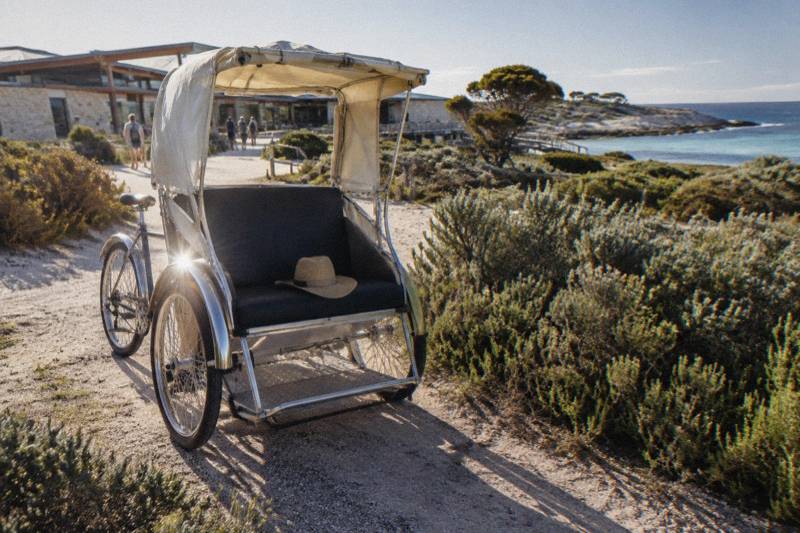
The private rickshaw tour deserves its place as the featured pick. Rotto Rickshaws run it from Frankie's on Rotto in Thomson Bay, 1.5 hours, from A$145 per person, rated 5.0 from 15 reviews, free cancellation, carrying up to three adults or a family of four. It is the only roster product built explicitly around a quokka-focused loop at a pace slow enough to stop and wait when the settlement edges get productive, which is precisely the behaviour the early-morning and late-afternoon windows reward. With a review pool of fifteen, treat the perfect score as a promising signal rather than a settled verdict, but the format is genuinely well matched to the question this article answers.
The segway alternative covers similar ground at a different price and posture. The one-hour Settlement segway tour from Segway Tours WA, from A$98 per person, 4.7 from 63 reviews, free cancellation, departs Bedford Ave in the Settlement and fits neatly into a morning arrival, before the ferry crowds build. The Fortress Adventure segway, from A$139 and 1.5 hours, trades settlement time for the guns and tunnels of the west, which is better military history than quokka strategy, though the island is small enough that both windows stay live across most products.
The ferry-and-bike option is the timing play for independent travellers. The Hillarys bike and ferry day from Rottnest Fast Ferries, from A$124 per person, 4.7 from 2,941 reviews, the deepest review pool on this site's roster, includes the return ferry, bike hire and the island admission fee, with free cancellation and pickup offered. A first sailing plus a bike puts you on the quiet eastern paths before 9 am, then lets you loop back to the settlement for the late-afternoon window before the return leg. The comparison between booking channels for this kind of package is covered in the ferry and bike packages guide.
How Do You Plan A Quokka Day Around The Ferry?
Plan your quokka day around the ferry by catching the first sailing of the morning. From there, spend the middle of the day on the beaches or join the Wadjemup Lighthouse tour, then work your way back to the settlement so you have the final two hours there before your return ferry leaves. That three-block structure matches quokka activity exactly, and it costs nothing extra to follow. The island admission fee, A$21.50 for a single-day adult, is collected inside the ferry fare at booking, so every ferry ticket already covers your landing and there is nothing extra to arrange on the jetty.
Crossing times shape the plan. From Fremantle it is about 25 minutes, from Hillarys about 45, and from Barrack Street Jetty in Perth up to 90 minutes each way, so a Perth departure eats more of your first morning window than a Fremantle or Hillarys one. The trade is that the Perth-based options, such as the nine-hour Rottnest Express ferry and bike trip from Elizabeth Quay at 4.5 from 693 reviews, or the SeaLink ferry and admission from Barrack Street at 4.7 from 345 reviews, both from-listed and free-cancellation, deliver the longest total day on the island, which buys back the later window with interest. Timetables vary by season and weather, and the official advice is to arrive at least 30 minutes before departure and book ahead in peak summer.
| Plan block | Hours (example day) | What to do | Why it works |
|---|---|---|---|
| Arrival window | First ferry to about 9 am | Settlement edges, Salt Store area, free volunteer walk if running | Quokkas finishing morning activity |
| Middle day | About 10 am to 3 pm | The Basin, Parker Point snorkel trail, lighthouse tour | Heat hours, animals sheltering anyway |
| Return window | About 3 pm to last ferry | Back through settlement, shaded lawns, Geordie Bay path | Animals re-emerging to feed |
| Evening | After dark | Only if staying overnight | Fully active, best of all, overnight only |
The middle block deserves one quokka-adjacent note. The Parker Point Snorkel Trail, about 800 m with 12 interpretive underwater plaques, sits inside a marine sanctuary zone, and the Island Explorer bus stops nearby, so the hot hours can be spent in the water without feeling like wasted quokka time. The same logic applies to the Oliver Hill train and tunnel tour, from A$40 and two hours, which fills a midday slot with island history while the settlement goes quiet. Neither replaces the morning window, but both make its absence survivable.
Staying overnight changes the game entirely. Quokkas are mainly nocturnal, and the ferry queues empty out by early evening, leaving the settlement to residents and the animals that own it after dark. Overnight visitors pay the extended-stay admission rate, adult A$28.50 against the A$21.50 day rate, and the island's self-contained accommodation and campground releases bookings on monthly open days, a rhythm worth knowing before you commit. The full picture, including the seasonal release pattern, is in the where to stay on Rottnest guide.
One lever shapes the day more than any other: which return sailing you book. The arrival and middle blocks flex, but the return window ends when your ferry leaves, so taking the last departure of the afternoon rather than a mid-afternoon one turns the hours when quokkas
Common Questions About Quokka Timing
When To See Quokkas On Rottnest Island?
Early morning and late afternoon, when the mainly nocturnal animals are most active. Take a first ferry to catch the morning window and stay near the settlement for the last hours before your return sailing.
Are quokkas active during the day?
Only at the edges of the day. Through the middle hours they shelter in shade under trees, buildings and scrub, so look in shaded spots rather than open lawns if you are on the island at midday.
What month are baby quokkas visible?
Joeys appear in mothers' pouches from about August and take their first hops around September, so late winter and spring offer the most visible quokka life of the year.
Can I touch or feed a quokka?
No. Observe from a safe distance, do not touch, do not feed, and stay on the paths. Deliberate interference can draw an on-the-spot fine and potential prosecution with fines up to A$10,000.
Where on the island am I most likely to see one?
Family groups are commonly found in and near the Thomson Bay settlement, but quokkas live right across the island, including quieter bays and trails, with dawn, dusk and shade the best conditions.
Do any tours guarantee a quokka sighting?
No tour can honestly guarantee one, because quokkas are wild animals. Guided options such as the private rickshaw tour and the Settlement segway hour simply put you in the right habitat at the right hours.